




Design and consulting firm IDEO was recently hired to work with the San Francisco Unified School District in order to figure out how to get kids to consistently eat lunch at school, according to Wired.
Over a 5-month period, IDEO designers observed and questioned students in San Francisco schools, in order to determine what they wanted. Their findings have been outlined IDEO's proposal entitled, "Future Dining Experience."
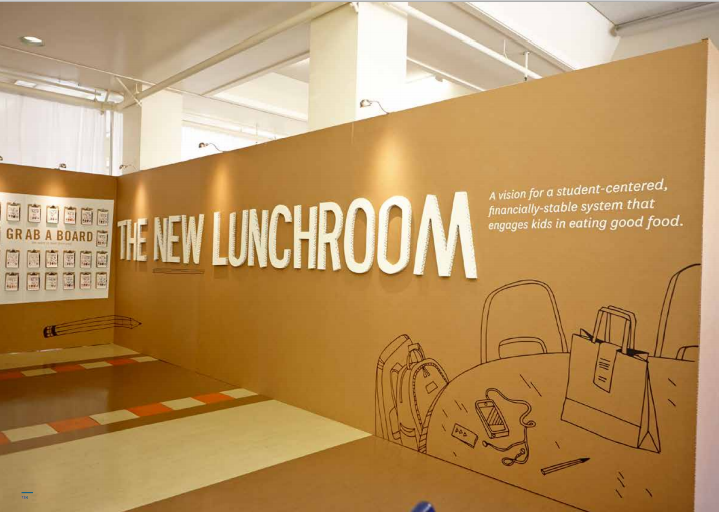
The district has more than 55,000 students attending 114 schools. Only about 40% of all students were eating school lunches on a regular basis and of those who qualified for free or reduced-cost lunches, only 60% were taking advantage of this.
"The school district was running a huge operation at what ended up being a deficit because kids weren’t really participating," says Sandy Speicher, an associate partner at IDEO.
While schools usually approach lunchtime like an assembly line, the designers felt this was all wrong.
A few of the key suggestions include tailoring the dining experience to specific age groups, making eating school lunches more convenient and rewarding, and creating an environment where students can take a break and socialize with their friends.
For high school students, IDEO envisioned "Smart Meal Technology." The app lets students to pre-order meals and rate the quality of what they've eaten once they're done. Once the success or failure of individual meals has been assessed, this data can be used to improve the process.
While the District says it is not planning to implement all of the suggested concepts, IDEO maintains that the resources available to the schools were the main considerations when creating the proposal.
The team worked directly with the District to determine how much could be spent, and also policy considerations, reimbursement regulations and labor rules.
"All of those pieces were design tools we had," says Speicher. "If you think of it like a product, those were the materials we had to design the system."
Fresh, healthy food was not the problem, but rather the structure and design of the system itself. It will be fascinating to see how technology and design continue to influence our often dysfunctional and out-of-date institutions in the future.
IDEO