


CHICAGO, IL - No industry is more deeply committed to the well-being of its communities and legacies than fresh produce. Feeding the world is not a small feat, and stewardship of the land carries its own risks and plentiful rewards. No one knows that better than the people who grow, pack, and ship it. As the demand for clear, concise food safety communications and procedures remains paramount, companies like RSM are helping their customers build more robust, transparent, and intuitive systems that allow growers to confidently move through the complexities of production agriculture.
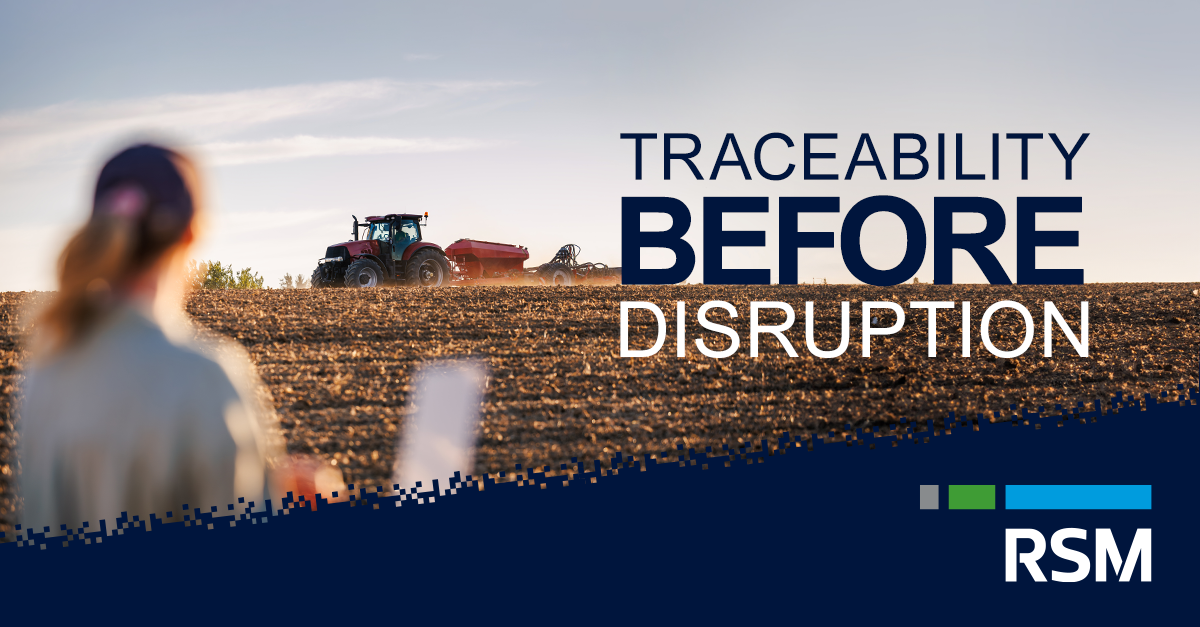
Kevin Head, Director of Food and Beverage at RSM, brings one of the firm's most valuable business solutions to the forefront: Lot traceability. And how that interacts with today’s recall management…
Why Food and Beverage Companies Are Rethinking Recall Management

The difference between a limited product recall and a major business disruption often comes down to one thing.
How quickly can you find a lot number?
The food and beverage industry is under growing pressure to answer that question. Regulatory requirements are increasing. Retailers expect faster responses. Supply chains are becoming more complex.
If a problem is discovered today, can you identify where a product came from, where it went, and which customers were affected?

For many organizations, the answer is not as clear as it should be. When inventory, supplier records, quality data, and customer transactions live across multiple systems, even a simple investigation can become a race against the clock.
That is why lot traceability is moving beyond compliance. It is becoming a business priority.
The Cost of Uncertainty is Growing
When a quality issue occurs, every hour matters.
The challenge is that many organizations still depend on a combination of ERP systems, spreadsheets, paper records, and disconnected applications to track inventory movements. The information exists, but it often lives in several places that were never designed to work together.
As a result, recall investigations can quickly become manual exercises. Teams spend valuable time gathering information, validating records, and piecing together transaction histories before they can confidently determine the scope of the issue.
The longer that process takes, the greater the operational, financial, and reputational impact can become.

Why Lot Traceability is Moving into the Spotlight
Recent discussions around FSMA 204 and food traceability requirements have brought greater attention to lot-level visibility across the supply chain. Organizations are being asked to demonstrate where products originated, how they moved through operations, and where they ultimately ended up.
Compliance is certainly part of the conversation, but it is no longer the only driver.
Many food and beverage leaders are beginning to view traceability as a business capability rather than a regulatory requirement.

When organizations can quickly trace products forward and backward through the supply chain, they can make faster decisions, reduce disruption, and respond with greater confidence when issues arise.
The Real Goal is a Smaller Recall
The most effective recall is often the one that impacts the fewest possible products and customers.
Without accurate lot tracing, organizations may be forced to expand the scope of a recall because they cannot confidently determine which inventory was affected. What begins as a limited issue can quickly grow into a larger business event simply because the necessary information is unavailable or difficult to access.
Organizations with stronger traceability capabilities can often isolate the affected inventory more precisely. Rather than casting a wide net, they can focus on the specific products, shipments, and customers involved.
That level of precision helps reduce waste, protect revenue, and maintain customer trust.
The Challenge is Usually Bigger than Technology
Many organizations assume a new application will solve the problem.
In reality, the biggest obstacles often sit between systems, processes, and teams.

Inventory data may live in one system. Supplier information may sit in another. Quality records may be maintained separately. Even when each individual process works well, the gaps between them create visibility challenges when speed becomes critical.
That is why successful traceability initiatives often begin with a broader conversation about data, process design, and operational alignment.
What a connected approach looks like…
A modern food and beverage platform creates a shared foundation for finance, operations, quality, and supply chain teams.
When inventory movements, supplier information, production records, and customer transactions are connected, organizations gain a clearer picture of product history across the business.
The result is greater visibility, faster investigations, and more confidence during audits, recalls, and customer inquiries.
Just as importantly, that same data foundation supports future initiatives around analytics, automation, and AI.

Start Before the Next Recall Happens
Most organizations do not think about recall readiness until they need it.
A better approach is to evaluate current traceability capabilities before a business event forces the issue. Understanding where data lives, how information moves through the organization, and where visibility gaps exist can help leaders build a stronger foundation for both compliance and growth.
Recall management is ultimately about confidence. Organizations that can quickly answer where a product came from, where it went, and who was affected are often best positioned to protect both their customers and their business.
Reduce risk before it becomes disruption. Discover how RSM helps food and beverage companies improve lot traceability, strengthen recall readiness, and create a connected foundation for future growth: Microsoft Food & Beverage.
As leaders in fresh produce look to transform our industry's tools and support the farmers that make this industry thrive each and every day, we will continue to bring you the thought leadership elevating the conversation.
Companies in this Story

RSM
As a food and beverage industry leader, RSM delivers the power of being understood to our clients, colleagues and…