


BOLOGNA, ITALY - Behind many of the family farms that keep our supply chain moving, there's a woman balancing the books, planning the next season, and making the key calls—often without the credit. As a juror for this year's Agraya Changemaker Awards, Christy Slay, Chief Executive Officer of The Sustainability Consortium, is helping bring that work into the light.
Christy took some time to tell me what she believes industry leaders are missing, and why supporting women farmers is as much a business case as it is a cause.

"Globally, women make up a significant portion of the agricultural workforce, close to 40 percent, and play critical economic roles strengthening communities, yet there are powerful cultural and supply chain barriers that prevent women from accessing the full value of their work," Christy explained, citing data from the World Bank, the USDA's National Agricultural Statistics Service, and the Food and Agriculture Organization of the United Nations.
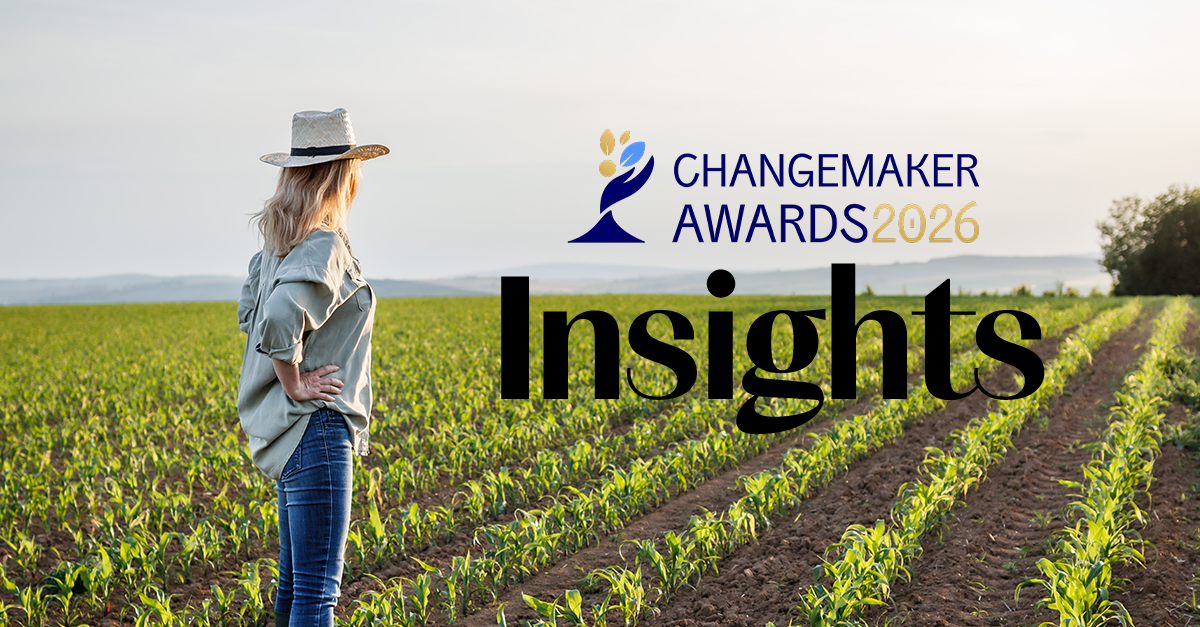
The Changemaker Awards are a global program celebrating bold, innovative initiatives that reshape agriculture and empower women in agrifood systems worldwide, backed by a jury of sector leaders in sustainable food systems and agribusiness. The Awards are part of Agraya's bi-annual Summit, Christy said, which will bring the agriculture and food sectors together in Bologna, Italy, for three days of exchange, insights, and connections.
She noted that women in agriculture have significantly lower wages than men, often have limited or no access to owning farmland, and less access to training, credit, and tools and equipment. And some of the biggest contributions are the hardest to see.

"Even more hidden is the fact that women are often the business operators for their family farms making key financial and planning decisions. As such, the role of women is harder to quantify as their leadership influence is often masked by their spouse or commercial farm operations," she said.
Christy shared that she and her fellow jurors will shine a spotlight on some of these 'invisible' achievers, honoring innovators helping women farmers break down persistent barriers.
The Business Case for Resilience
For Christy, supporting women farmers pays off across the whole chain.
"Given women's influence and impact in global agriculture, supporting programs that address the key challenges can create resilient supply chains and communities through increased crop yields, reduced harvest losses, stable supply to markets, and increased conservation impacts through regenerative practices," she stated. She added that consumers are more aware of the importance of women in agriculture.

Companies that invest in programs supporting women can build consumer loyalty and open new consumer channels. She also pointed to the next generation of growers.
"Another factor is intergenerational farming—when daughters and young women see farming as a profession in which they can own assets, make decisions, use technology, and earn income, agriculture might become more attractive as a career outlook, increasing workforce resilience," Christy said.
What Stood Out This Year
With 2026 being the UN International Year of the Woman Farmer, Christy noted that this year's awards will highlight initiatives that strengthen the role of women in agriculture. The range of entries left an impression.
"The diversity of approaches the female leaders took to innovation, sustainability, and community impact was impressive," she said.

Projects ranged from using agricultural drones for precision farming to training women to take over more automated operations to creating women-owned demonstration farms. As Christy put it, "there are so many ways to support women in agriculture that drive positive impact," and each community may need something different.
Looking Ahead
Asked what would make the biggest difference going forward, Christy pointed to funding and to the partners who put it to work.
"Government and industry funding to support women in agriculture is a win/win. There is a clear economic case to make from a supply chain perspective," she explained. "The data on the ROI is there. The right program partners are the key to unlocking the full value of funding programs for women. A project partner who knows the local community and culture, understands the needs, and can move quickly through bureaucracy to get funding applied on the ground is a recipe for success."
The winners of the Agraya Changemaker Awards will be unveiled at the 2026 Agraya Summit in Bologna, Italy, October 27-29.