


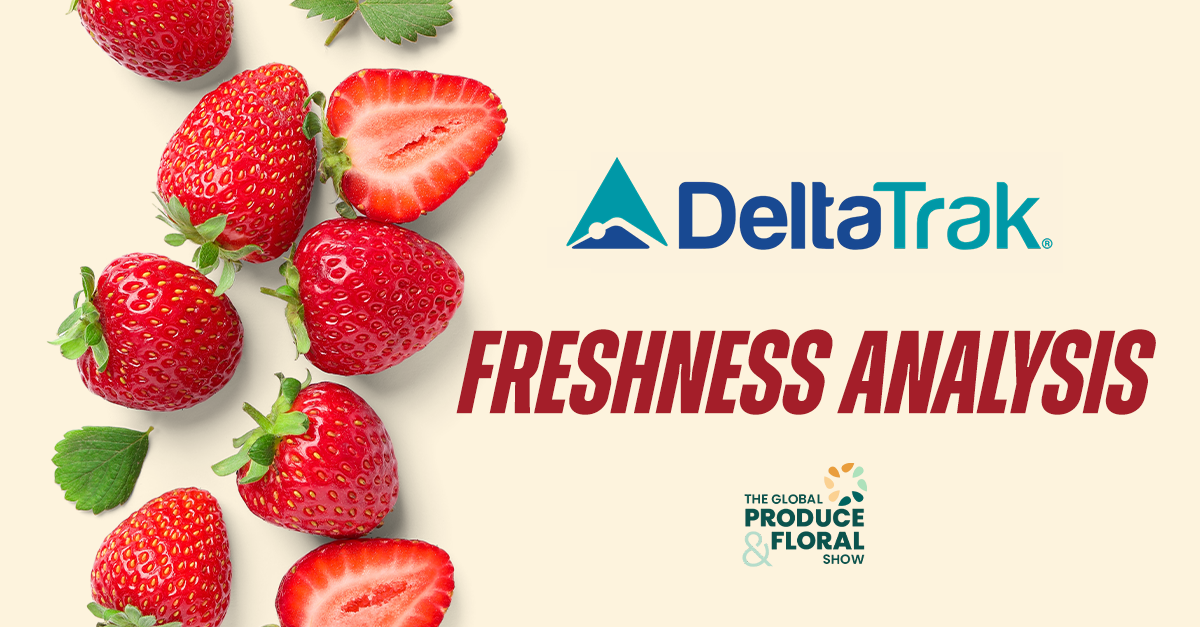
PLEASANTON, CA - Americans spend about $5.4 billion annually on strawberries, according to the California Strawberry Commission, but quality problems threaten that value. In an analysis of online strawberry reviews from a major national grocery retailer, DeltaTrak found that 78% mentioned mold or rot, highlighting a quality issue that can begin long before berries reach a shopper’s refrigerator.
For growers, shippers and retailers, those complaints reflect lost value and damaged shopper trust, often from problems that start in the supply chain.

“Long before mold becomes visible, strawberries may have already lost valuable shelf life,” said Dr. Jeffrey K. Brecht, emeritus professor of postharvest physiology at the University of Florida. “Cooling promptly after harvest and maintaining proper temperatures throughout distribution help preserve quality. Understanding how much shelf life remains gives suppliers and retailers a better opportunity to act before the fruit deteriorates.”
To examine shelf-life loss during distribution, DeltaTrak analyzed more than 8,000 inbound berry shipments using UBQ Freshness Index™ (FreshIDX™), which combines temperature history, transit events and commodity-specific biological models to estimate remaining shelf life. The analysis found that 31.5% of strawberry loads had lost at least half a day of remaining shelf life by the time they reached the distribution center.

For suppliers and retailers, that means less time to inspect, distribute and sell berries before quality declines. Delays in cooling, transportation or receiving can shorten the selling window before mold or other problems become visible, reducing opportunities for full-price sales and increasing markdowns and shrink.
DeltaTrak modeling estimates that recovering just one day of usable strawberry shelf life could improve revenue retention by approximately 27%. The model evaluates how earlier prediction of mold growth can enable retailers to preserve more full-price sales while reducing losses associated with markdowns and product removal from store shelves.

“This analysis puts a financial value on freshness,” said Karl McDermott, chief SaaS revenue officer at DeltaTrak. “For strawberries, one additional day of advance warning can mean more time to sell at full price and less product lost to markdowns or waste. The industry has become very good at tracking the journey. The next step is understanding what that journey did to the product and acting on that information before value is lost.”
FreshIDX turns shelf-life estimates into practical guidance for produce teams. Using those estimates, teams can:
- Identify at-risk shipments before quality visibly declines.
- Prioritize inspections and reroute or expedite deliveries.
- Move products based on remaining shelf life and predicted mold growth rather than arrival order alone.

FreshIDX is delivered through the UBQ Network powered by DeltaTrak, a digital ecosystem connecting growers, shippers, logistics providers, buyers and retail store managers with meaningful produce quality and shelf-life data to make informed decisions to reduce shrink and increase profitability. In the two years since opening its membership program, the network has grown to support more than 1,000 organizations worldwide.
To learn more about FreshIDX or the free UBQ Network membership program, visit ubq.network or stop by booth 2826 at the IFPA Global Produce & Floral Show, Oct. 15–16.
Companies in this Story

DeltaTRAK
DeltaTRAK®, Inc., is a leading innovator of cold chain management and temperature monitoring solutions. Our product line…