














Email horizontal


|

SALINAS, CA - In fresh produce, a lot can change in a matter of minutes, making a clear view of inventory essential to keeping operations moving. In a new blog post, Famous Software explores how real-time inventory visibility can give teams a more accurate picture of product as it moves through the supply chain, from location and availability to repacking and traceability.
In fresh produce, inventory doesn't stand still for long.
Product is received, moved, repacked, allocated, picked, and shipped throughout the day. At the same time, quality, availability, customer requirements, and order priorities can change quickly.
That makes inventory visibility more than a reporting convenience. Teams need to know not only what inventory they have, but where it is and whether the information they're using reflects what's happening now.

The distinction matters. A system that updates inventory periodically may provide an accurate picture of where things stood at the last update. Real-time inventory visibility gives teams access to current information as transactions occur, helping them respond while there is still time to act.
For businesses managing perishable inventory, those minutes can matter.
Key Takeaways

What Is the Difference Between Batch-Updated and Real-Time Inventory?
Batch-updated inventory reflects transactions at scheduled intervals, while real-time inventory updates as transactions occur.
Not every system that provides inventory visibility provides information the same way.
In a batch-processing environment, transactions may be collected and posted at scheduled intervals. That means the inventory information that employees see can reflect where things stood at the time of the last update rather than what has happened since.
With real-time transaction processing, inventory information is updated as transactions occur.
That distinction becomes especially important in a fast-moving produce operation. When someone is allocating inventory, fulfilling an order, investigating an exception, or responding to a quality concern, information from several hours ago may lead to a very different decision than information reflecting current activity.
The value of real-time visibility isn't simply that data moves faster. It's that teams can see what's happening now and make decisions while there's still time to act.

What Should Real-Time Inventory Visibility Include?
Real-time inventory visibility should provide current inventory quantities, precise product location, status, and the information needed to identify and trace product.
Knowing total inventory on hand is only part of the picture.
Warehouse teams also need to know where product is located. Depending on the operation, that may mean visibility by warehouse, cooler, room, row, location, pallet, or other level of detail.
That specificity helps turn inventory information into something employees can act on.
Can the team quickly locate the right product for an order? Can they determine what inventory is available without walking the warehouse? Can they identify product associated with a quality concern? Can employees at different facilities work from consistent information?
The more precisely a system can connect inventory quantities with current location and status, the more useful that visibility becomes in day-to-day operations.

How Does Real-Time Visibility Support Traceability Through Repacking?
Real-time visibility supports traceability through repacking by maintaining the relationship between the resulting inventory and the source lots or growers that contributed to it.
Inventory visibility becomes even more important when product doesn't remain in its original configuration.
Fresh produce may be repacked, consolidated, or otherwise transformed as it moves through an operation. When that happens, teams still need to understand the relationship between the resulting inventory and the source lots or growers that contributed to it.
A strong inventory and traceability process maintains those relationships as product changes form or location.
That means the question isn't simply, “Can I see this pallet?” It's also, “Can I understand what contributed to it and where that product went next?”
Connecting current inventory information with traceability helps teams maintain visibility without losing the product history behind it.
See the full blog here.

EAGLE, ID - The Big Idaho Potato Truck rolled into Eugene over Labor Day weekend as the Idaho Potato Commission (IPC) sponsored the season-opening matchup between Boise State and Oregon, kicking off National Potato Month on one of college football’s biggest stages.
From Friday’s crowd at Safeway to Saturday’s fourth-quarter thriller at Autzen Stadium, Idaho® potatoes brought Boise State and Oregon fans together throughout a memorable college football weekend.
The excitement peaked Saturday as Boise State took on No. 2 Oregon in front of 57,652 fans at Autzen Stadium and a national CBS audience. The Broncos led throughout the first half and entered the fourth quarter tied with the Ducks at 24, putting one of the nation’s top-ranked teams on upset alert. Oregon ultimately broke the tie when quarterback Dante Moore connected with wide receiver Dakorien Moore for a 62-yard touchdown, and the Ducks held on for a 34–27 victory.
It was a good day to be a Duck. And a pretty good day to be a potato.

“We’ve been part of college football for a long time, and sponsoring a matchup between Boise State and Oregon was something special,” said Jamey Higham, President and CEO of the Idaho Potato Commission, in the recent release. “Boise State showed why it has such a proud football tradition, taking one of the nation’s top-ranked teams down to the wire, and fans on both sides created an incredible atmosphere. It was a great way to bring people together around Idaho potatoes and kick off National Potato Month.”
The fun began before the Truck even reached Eugene. Oregon senior edge rusher Teitum Tuioti helped spread the word through a playful social media reel. In the video, Tuioti shared some strong opinions on baked-potato toppings while signing a limited number of Idaho potatoes and inviting fans to find the four-ton Truck throughout the weekend.
By Friday morning, the social media tease had become a larger-than-life attraction at Safeway. Shoppers and football fans posed for photos with the Truck, picked up Idaho potato swag, and met Spuddy Buddy and The Duck. The Duck also handed out the Idaho potatoes autographed by Tuioti, giving a lucky group of fans a distinctly Idaho take on sports memorabilia.

The weekend also gave back to the Eugene community. Through the Big Idaho Potato Truck’s A Big Helping program, IPC donated $1,000 to Food for Lane County to support the organization’s work addressing hunger throughout the region.
It Never Rains at Autzen Stadium, but Idaho Potatoes Were Everywhere
On game day, the Big Idaho Potato Truck joined the pregame festivities outside the Moshofsky Center, where Boise State and Oregon fans stopped for photos, picked up giveaways, and visited with Spuddy Buddy and the Tater Team. Fans also added their names to the Truck’s A Big Helping signature board, carrying the spirit of Friday’s donation into game day and recognizing the communities the Truck supports along its nationwide tour.
Inside Autzen, IPC’s presence extended well beyond the Truck. Idaho potato branding appeared across in-stadium digital displays throughout the game, including bold field-level creative and animated Big Idaho Potato Truck imagery visible during live action. IPC’s newest commercial also played on the stadium videoboard before kickoff, bringing the Commission’s broader advertising campaign into the stadium.
Idaho potatoes weren’t just part of the festivities. They were on the menu, too. At select Gridiron Grill locations, fans could order a limited-time dish made with Idaho Steakhouse Fries topped with steak strips, mushrooms, and brown gravy.

At halftime, six young fans took the field for a potato sack race, with Spuddy Buddy cheering them on and The Duck waiting at the finish line. The race brought a classic piece of potato-themed fun to one of college football’s loudest stages.
The larger-than-life weekend gave media a fresh and highly visual angle on the matchup, generating 75 broadcast and online placements with a total reach of more than 15.7 million. Coverage ranged from regional publications and television news to nationwide syndication and international coverage. Social media extended the excitement even further, generating more than 91,900 views.
The weekend showed what can happen when a sponsorship gives fans more than a logo to look at. By inviting fans to see, share, and taste Idaho potatoes against the backdrop of an unforgettable college football game, IPC connected with longtime potato fans, introduced the brand to new audiences, and gave National Potato Month the kind of kickoff only a four-ton potato could deliver.
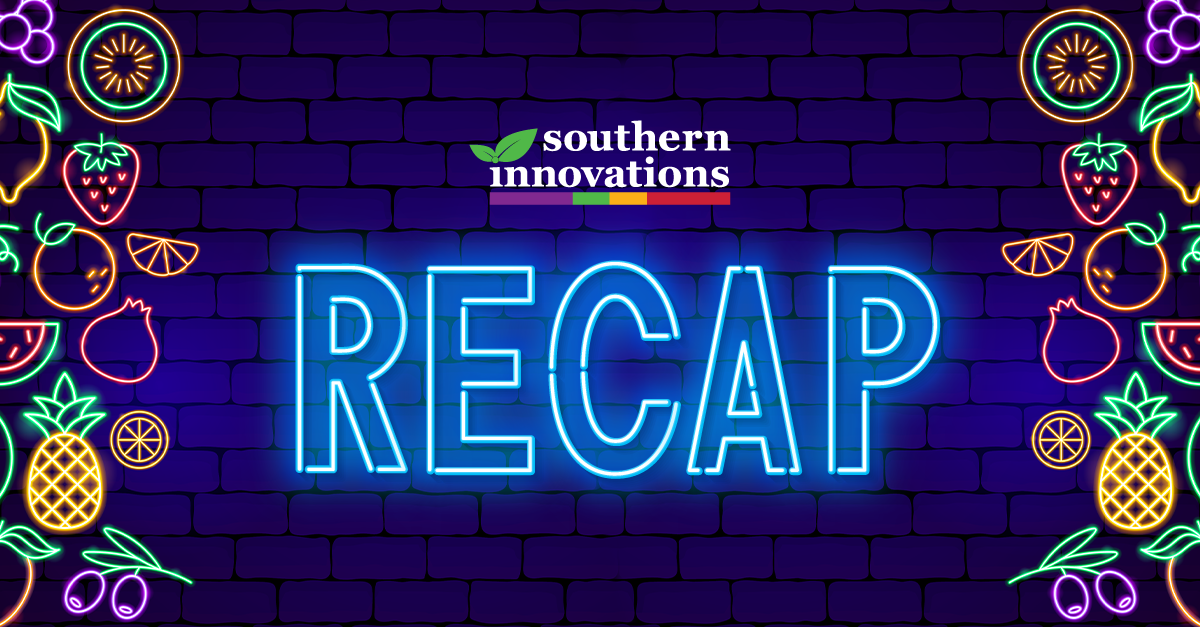
NASHVILLE, TN - Walking the glistening, neon-lit street of Broadway in Music City, with live music pouring out of every doorway, and seeing people connecting and enjoying the atmosphere, it’s easy to remember what makes this industry shine.

Such is the warmth left from a few days in Nashville, Tennessee, for Southeast Produce Council’s 2026 Southern Innovations, which moved from the Gaylord to the heart of the city itself at the Music City Center.
SEPC hosted 208 exhibitors, with over 320 self-registered retail, foodservice, and wholesale buyers ready to join the event.
The show's opening acts came early. Wednesday morning sent early risers out to the Founders Memorial Golf Tournament at Hermitage Golf Course, the Martin Eubanks Sporting Clays Classic at Nashville Gun Club, and the Cool Cucumber Classic Pickleball Tournament—a trio of tournaments that balanced competition and Southern hospitality.

And the first evening belonged to the Welcome Reception in the Karl F. Dean Grand Ballroom, where SEPC leaned fully into this year's theme—the grit of Broadway meeting the glow of the produce industry's future.

"Southern Innovations has become a powerful catalyst for our industry because it puts innovation at the center of the conversation. It’s not simply about showcasing new products," David Sherrod, President and CEO, Southeast Produce Council. "It’s about bringing together people, ideas, technologies and solutions that are shaping the future of produce. The success of Southern Innovations reflects our industry’s appetite for progress and our collective commitment to finding better ways to grow, move, market and ultimately drive more fresh produce consumption. That is what makes this event truly distinct.”
Thursday shifted the week into education mode. SEPC University opened the morning with Anne-Marie Roerink, President of 210 Analytics, debuting the council's sixth annual "What's New?" consumer research session with information that had attendees buzzing through the rest of the day.
From there, the morning turned toward the horizon with futurist Mike Lee, Principal of The Future Market, completing a morning framed by a scope of where the industry stands today against where it's headed next. Midday brought the Good Seeds & Southern Roots Keynote Luncheon, featuring New York Times bestselling author Ryan Leak, who gave the crowd inspiration, wisdom, and a renewed commitment to lean into failure as an opportunity to “level up.”

“Southern Innovations is designed to look around the corner and to anticipate where our industry is going. We want to create a platform that helps our members get there. As we look toward 2027 and beyond, we will continue to challenge ourselves to make the show more immersive, more experiential and more connected to the innovations transforming every part of the fresh produce supply chain," Raina Nelson, Chief Operating Officer, Southeast Produce Council. "Our vision is for Southern Innovations to be the place where the next great idea is discovered, the next meaningful connection is made, and the future of our industry begins to take shape. We’re not just showcasing what’s new, we are helping to define what’s next.”
The afternoon kept the momentum going with a hands-on Working Genius Workshop led by husband-and-wife facilitation team Clark and Susan Ann Roper, giving attendees a chance to put the luncheon's ideas into practice.

Thursday closed out with the Chairman's Dinner Dance, themed "An Evening of Stars, Stripes, and Spirit"—a tribute, per SEPC, to the resilience and hard work behind both the American farmer and the American dream.

“Another great show in Nashville. The educational sessions were outstanding, and the trade show itself was top-notch. Connecting with suppliers, other retailers, and the very important tech sector was second to none in this smaller setting. Hats off to Dave Sherrod and his team for pulling it all together yet again!” Chris Keetch, Director of Produce and Floral for The GIANT Company, shared.
Friday closed the gathering by handing the floor over to the exhibitors themselves. Retail and foodservice buyers got an exclusive early hour with Gold and Silver Level exhibitors before the Exposition officially opened, centering on the Wall of Innovations showcase—SEPC's curated look at the newest products, packaging, and technology hitting the market.

Celebrations included not only the official graduation of this year's STEP-UPP class, but also the Unseen Hero Award recipients.

Congratulations to the Unseen Heroes
As Saturday brought the week to a quieter close with SEPC's traditional Al Finch Memorial Prayer Breakfast, it was the perfect send-off to cap off a dynamic few days together in Music City.



HOUSTON, TX - For as long as fruit has been packed and shipped, producers have judged the quality of a whole load by cutting open a handful of sample fruit. Minimizing the guesswork for growers, Orbem is offering producers non-destructive and non-invasive insight into the inside of every fruit to enhance their supply chains. The company's solution for the fresh produce sector, Genus Echo, uses AI-powered MRI to analyze fruit all the way to the core, reducing the guesswork in quality assurance.

"By turning previously inaccessible biological data into actionable intelligence, we help our customers make informed decisions in time. In watermelons, we catch defects like hollow heart, internal impact, and bruising damage, as well as over-ripeness," explains Pedro Gomez, Founder and Chief Executive Officer. "In avocados, we detect issues like flesh browning, rot, and the internal discoloration you normally only find once the fruit is cut open, along with maturity."
Orbem's story began in the poultry industry, where the company has used the same technology to identify the sex of a chick inside the egg before it hatches, sparing millions of male chicks from culling. To date, Orbem has scanned more than 200 million eggs. It has since brought these capabilities to fresh produce, focusing first on watermelons and avocados, with mangoes and other categories to follow.

Genus Echo is already installed with watermelon grower JimboFresh (Spain) and in use this season.
"Producers and retailers both benefit from better predictability. Today, a handful of sampled fruit stands in for an entire shipment, so most of the internal quality is inferred rather than measured," says Pedro. "With the visibility Genus Echo provides on every fruit, producers can ship at consistent quality and reduce their exposure to rejections and the rerouting costs, product-value loss, and admin work that come with them. Retailers, in turn, get a more dependable supplier, with positive downstream effects on consumer satisfaction, repeat purchase, and category performance."
Genus Echo integrates into a producer's existing packing line, with installation taking place during the off-season to avoid disrupting peak operations. It runs at line speed and communicates with the surrounding equipment, so fruit is sorted against the standards each producer sets, adding a layer of internal-quality information alongside traditional quality assurance.

"Speeding MRI up to line speed is the core breakthrough. A clinical MRI scan takes 20 to 25 minutes. Genus Echo brings that down to under a second per fruit, which is what makes it work on a packing line," says Pedro. "The imaging is optimized for the specific grading decision and paired with AI that classifies in real time, and that AI keeps improving in the field. In poultry, on the same hardware, throughput has risen by roughly 30 percent in about 18 months, almost entirely through software and model work. This is exactly why we won't stop at watermelons and avocados. Building on that vast dataset, we can easily translate what we've learned from one type of fruit to another."
As MRI moves from the hospital to the packing line, the fresh produce industry is gaining something it has never had: the ability to know, rather than guess, what is inside every piece of fruit it ships.
For more insights into the technology backing the fresh produce space, keep an eye on AndNowUKnow.
|