














Mobile Ad File

Mobile horizontal ad file

|
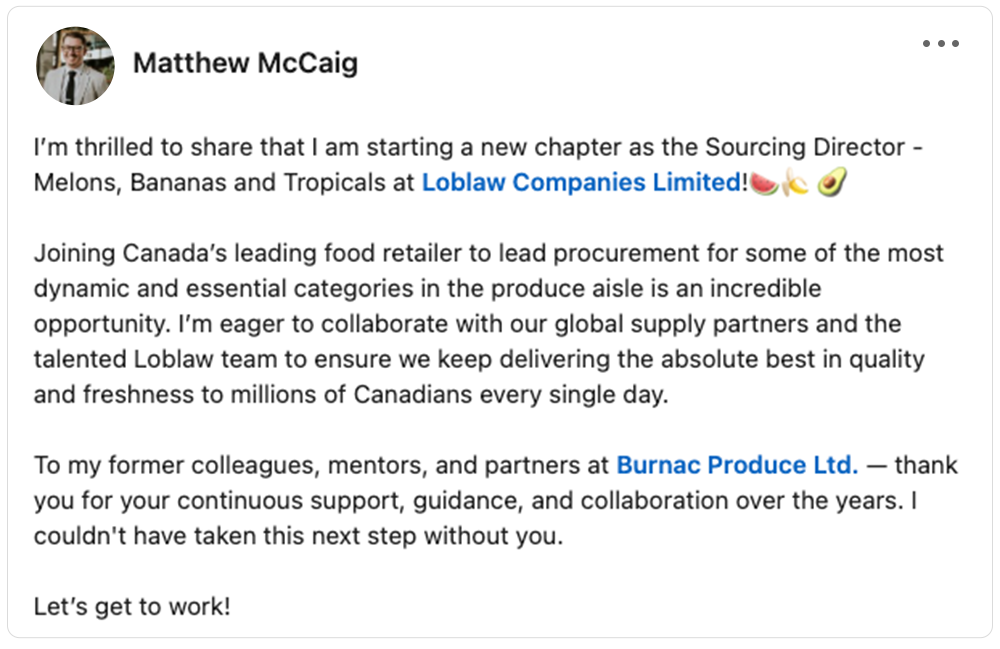
Fresh role, fresh opportunities, same passion for produce!
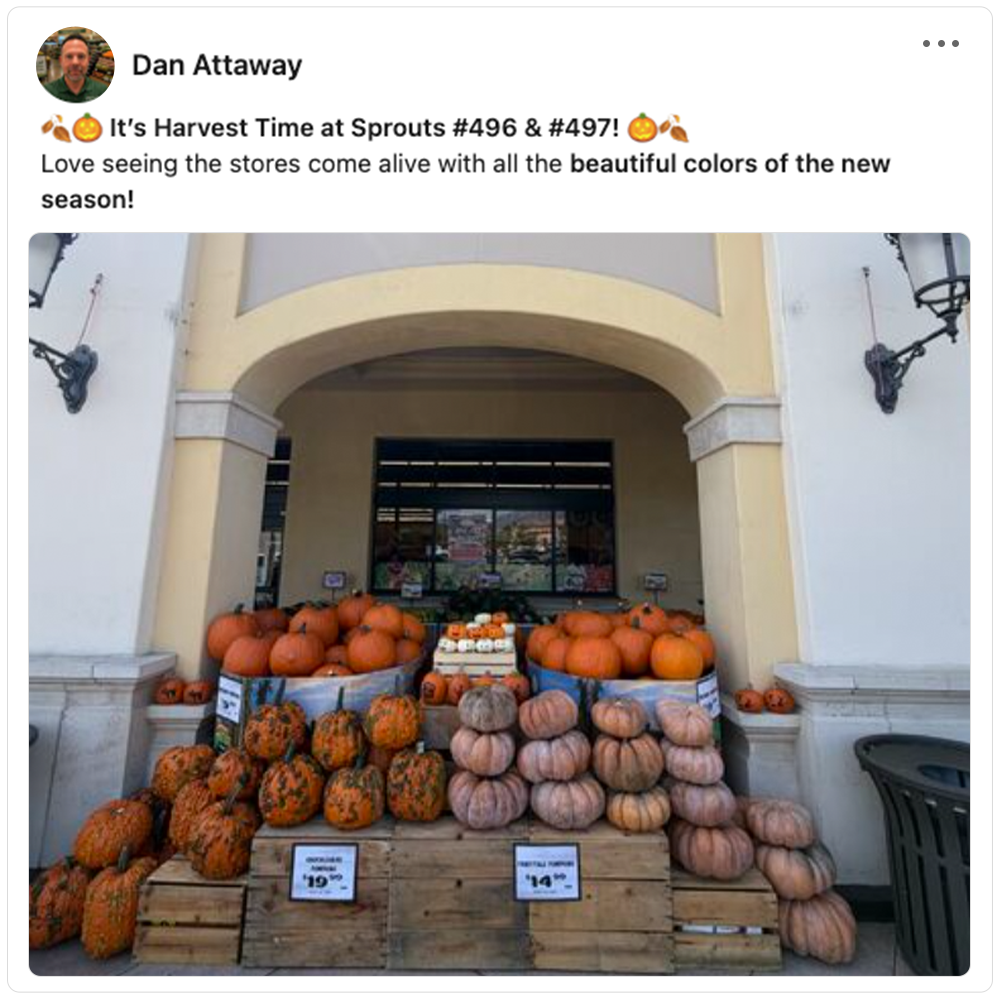
Fall is here...

CINCINNATI, OH - The Kroger Co. will host an Investor Update in New York, where company leaders will outline a multi-year plan to build America's Favorite Grocer and accelerate growth. The company also reiterates its guidance for full-year 2026 provided at its second-quarter earnings.
Comments from CEO Greg Foran

"Kroger has a clear opportunity to unlock our full potential and build America's Favorite Grocer," said Greg Foran, CEO of Kroger. "We are making value more visible and focusing resources closer to the customer where we see the highest returns. With our customers at the center, we are simplifying and modernizing our business to deliver a great customer experience and provide long-term value to our shareholders."
Building America's Favorite Grocer
Kroger's updated strategy centers on three pillars, with a clear focus on execution and the customer at the center.

Kroger's Long-Term Financial Framework
Kroger is introducing an updated financial framework intended to give investors a clearer view of the performance of its core grocery business. The company is targeting:
The new EPS target measures earnings growth alone. It replaces the previous 8%-11% total shareholder return target, which included the dividend yield, and implies a stronger earnings outlook. The company's capital allocation strategy remains unchanged and focused on making high-return growth investments, maintaining financial strength and returning surplus capital to shareholders via dividends, subject to board approval, and share buybacks.

"Our financial framework reflects our renewed focus on the core grocery business and provides a clearer line of sight from operating performance to shareholder value," said David Kennerley, CFO of Kroger, in the recent release. "We are targeting higher sales by 2029, with stronger adjusted EBITDA and adjusted EPS growth over the next three years. We remain focused on delivering customer value in a fully self-funded way, prioritizing high-return investments and disciplined cost savings so we can expand margins over time while continuing to invest in growth."
Investor Update
Kroger's 2026 Investor Update will include presentations from members of the company's leadership team on customer value, eCommerce, Retail Media, store execution, operations and the company's long-term financial framework.
The live webcast of the event is scheduled to begin at 9:00 a.m. ET and is expected to conclude at approximately 12:00 p.m. ET. All interested parties are invited to access the webcast at ir.kroger.com under Events & Presentations.
An on-demand replay of the webcast and presentation materials will be available on Kroger's investor relations website following the event.
MONTEREY, CA - The California Agricultural Leadership Foundation (CALF) announces Dr. Joel Kimmelshue (Class 37) as its new board chair, succeeding Mike Young (Class 35) following the completion of Young’s term. Joining Kimmelshue on the foundation’s executive board are Fidela Irigoyen (Class 21) as vice chair and Rob Goff (Class 45) as secretary-treasurer.
The transition comes as CALF begins implementing its 2026–2031 strategic plan, which outlines priorities for developing leaders, engaging alumni, expanding awareness of the foundation’s impact and strengthening its financial future.

Young’s tenure as chair capped more than 20 years of service on the foundation’s board, preceded by involvement with its Alumni Council. A steadfast advocate for Ag Leadership, he helped strengthen the foundation, advance its mission, and shape a vision for its future. His dedication, generosity, and belief in the power of leadership development have left a lasting mark on the organization and the generations of agricultural leaders it serves.
Kimmelshue is owner and principal agricultural scientist at Land IQ. As a member of the team that helped shape the foundation’s new strategic plan, he steps into the chair role with a clear understanding of its priorities and the partnerships needed to achieve them.

“When asked to consider being the board chair for the California Agricultural Leadership Foundation, not only was I humbled and honored, but I also had great excitement for the opportunities the Foundation, the Program, and our alumni base have moving forward; specifically, those opportunities outlined in our new 5-year strategic plan,” Kimmelshue said in the recent release. “To help facilitate and lead the quest for those plan milestones and goals is a challenge taken seriously. I greatly look forward to working with Foundation staff, fellow Board members, alumni, current and future class members, and the growing number of supporters in not just meeting, but hopefully exceeding those expectations.”
Together, Kimmelshue, Irigoyen and Goff will work with the board to advance the foundation’s mission of growing leaders who make a difference.
NORTH AMERICA - A leaf of lettuce does not simply arrive on our table; it travels through soil, seasons, hands, risk, and remarkable care to get there. I have the privilege of knowing something about that journey—the blood, sweat, equity, and tears behind a strawberry, an onion, or a head of lettuce making its way from seed to shelf. After 15 years of witnessing this industry up close, I live in a state of near-constant gratitude for fresh produce.
A much wider consumer network does not. And therein lies the problem.

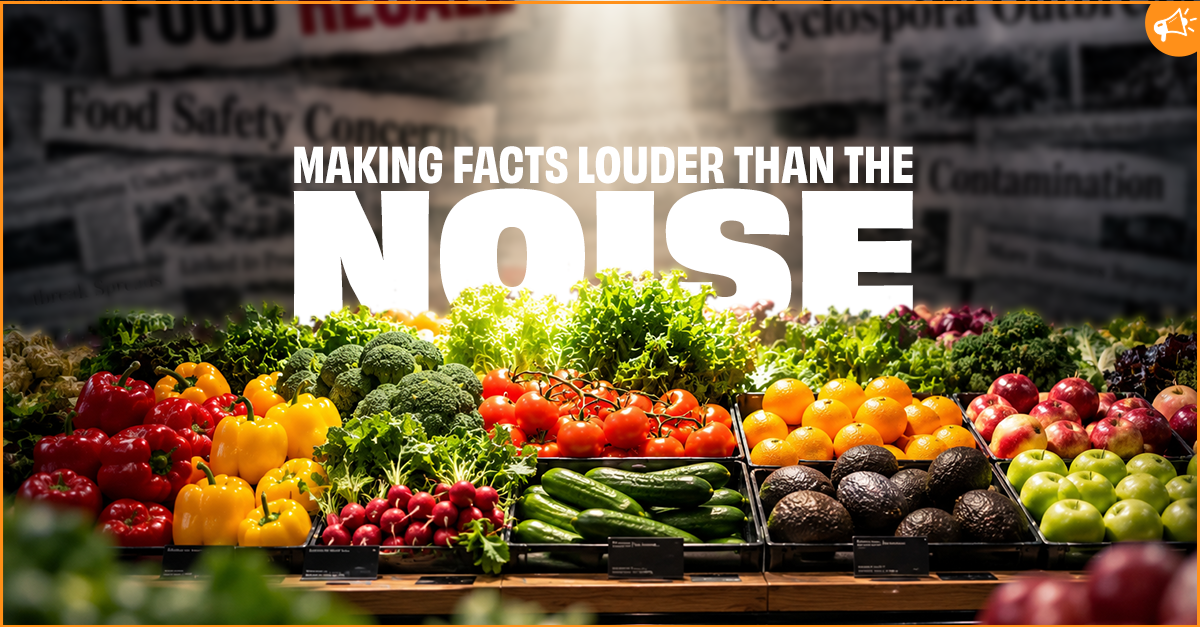
Recently, I wrote about the broader impact of incorrect messaging surrounding the Cyclospora food safety event. What began with specific products had spilled far beyond them. Unrelated commodities appeared alongside national coverage. Unsupported claims traveled the social wires. Suppliers across categories saw the consequences as consumers responded not just to the facts at hand, but to a much broader perception of risk.
When someone yells “fire,” logic has a tendency to go out the window.
That isn’t a criticism of the consumer. It’s human nature. And consumers today are navigating an extraordinary amount of noise—social media, headlines, influencers, national outlets, algorithms- all moving much faster than the facts can sometimes follow.
So, what can we do about it?
I keep coming back to the relationship between supplier and retailer—and all those organizations in between.

Our suppliers possess an enormous amount of knowledge that never reaches the person standing in the produce aisle. They know their farms. They know food safety. They understand traceability, geography, seasonality, commodities, and the distinctions that can mean everything when an outbreak, recall, or even a misleading headline begins influencing buying behavior.
What if we put more of that knowledge directly into retailers’ hands—before they need it?
Simple consumer-facing FAQs, for example. Talking points for produce teams. Digital and social assets. Clear explanations of what a recall does—and does not—mean. Resources that allow a retailer to answer a shopper’s question with confidence rather than scramble for information once the alarm is already sounding.
And importantly, there are retailers, suppliers, commodity groups, associations, and organizations already doing this work exceptionally well. They deserve credit. There are tremendous advocates for fresh produce working every day to educate consumers, promote consumption, protect confidence, and communicate responsibly.

The question is how we build on it. How do we connect those efforts, give them greater reach, and arm more of our retail partners with the same tools? Because silence doesn’t create an information vacuum for very long. Someone fills it.
And too often, that someone doesn’t know this industry. None of this means softening our stance on food safety. Food safety is essential. Consumers deserve transparency when something goes wrong, and in sync with that, they also deserve accuracy. Advocating for a commodity wrongly swept into a broader narrative is not ignoring food safety. Helping a retailer educate its shoppers is not circling the wagons. Correcting misinformation is not minimizing risk. It is education. It is advocacy. And I would argue it is part of our responsibility.
Fresh produce is a gift. I know that because this industry has given me the privilege of seeing what it takes to produce it. I don’t have the solution for how we make the facts louder than the noise. But I want to find one. And I know that desire runs much deeper than mine among our produce friends.