Email horizontal



WASHINGTON, DC - The U.S. Department of Agriculture (USDA) has imposed sanctions on L&L Produce LLC. The company, operating from Texas, failed to make prompt payment to two produce sellers in the amount of $326,281 for produce that it purchased, received and accepted in interstate and foreign commerce from Dec. 2022 to Aug. 2023, in violation of the Perishable Agricultural Commodities Act (PACA).
L&L Produce LLC has been barred from operating in the produce industry until June 23, 2028, and then only after it applies for and is issued a new PACA license by USDA and posts a USDA-approved surety bond. The company’s principal, Adrian Luna, may not be employed by or affiliated with any PACA licensee until June 23, 2027, and then only with the posting of a USDA-approved surety bond.
USDA is required to publish the finding that a business has committed willful, repeated, and flagrant violations of PACA and impose restrictions on those principals determined to be responsibly connected to the business during the violation period. Those individuals, including sole proprietors, partners, members, managers, officers, directors, or major stockholders, may not be employed by or affiliated with any PACA licensee without USDA approval. By issuing these penalties, USDA continues to enforce the prompt and full payment for produce while protecting the rights of sellers and buyers in the marketplace.
For more information, contact the PACA Investigative Enforcement Branch at (202) 720-6873 or [email protected].
HENDERSON, NV - AgroCap Financing, a premier specialty finance company supporting agri-food businesses across North America, announced its inclusion on the prestigious Inc. 5000 list, ranking No. 631. This annual list highlights the nation’s most successful independent, entrepreneurial businesses that drive innovation, create jobs, and shape the future of the economy.
AgroCap’s remarkable 543% three-year revenue growth stems from its specialized non-recourse factoring and receivables financing solutions. Serving the produce, agri-food, manufacturing, pet food, and related sectors, the company advances up to 97% of invoice values. This eliminates credit risk for clients and delivers the immediate working capital required to scale operations without traditional debt obligations.

“This milestone validates the strength of our model: delivering fast liquidity to businesses that need capital to move at the speed of their operations,” said Cristian Sierralta, CEO of AgroCap, in the recent release. “Our growth reflects the deep trust of our clients and partners, as well as the unwavering commitment of our team.”
With a dedicated cross-border focus and extensive PACA expertise, AgroCap has empowered thousands of Latin American exporters selling into the United States and Canada. The executive team leverages decades of agricultural experience to provide tailored solutions and rapid execution for underserved traders, acting as a strategic growth partner.

AgroCap’s flexible capital allows companies to seize immediate sales opportunities. Notable recent originations include:
Cristian Sierralta added, “This is a fantastic milestone, but we are just getting started. We will continue innovating and expanding our footprint to ensure cross-border food supply chains never have to slow down due to a lack of capital.”




UNITED STATES - As we recently reported, Trader Joe’s announced several new stores over the summer in June and July. The store announcements have continued since then, with more openings taking place just this month.

During August, September, and October, Trader Joe’s announced the opening or planned opening for 14 new stores, according to its website. The newly opened store locations include:
Store locations coming soon include:
As we follow along with the continuous growth of this retailer, keep coming back to ANUK.
|

BENTONVILLE, AR - There is a balance act constantly at play in fresh produce—one in which companies must know when to embrace tradition, when to hit the gas on innovation, and when to employ the perfect balance of both. Understanding the road to success can wind in many directions; Denise Junqueiro’s The Trail Blazers Firm is helping produce leaders carve their own paths while opening new doors for industry innovation.

Denise’s 20 years of experience in fresh produce has allowed her to witness firsthand what happens when companies cling too tightly to tradition without prioritizing innovation along the way, or, on the other hand, focus so strongly on innovation that they lose the value of tradition.
Enter The Trail Blazers Firm, which focuses on two key areas supporting this very concept:
As Denise harnesses her industry expertise to help companies drive growth in these areas, she recently shared more about the vision behind The Trail Blazers Firm.

Why is it important for today's leaders to pursue innovation and move beyond outdated thinking?
“I think it is important to pursue innovation to preserve legacy. If you stay the same, nothing can grow or be sustained. The world, our businesses, and our lives are constantly changing—and changing faster than we have ever seen before. If we don't know how, or aren't willing, to challenge ourselves to grow, what we truly value and care about may not be here for the future.
You can hold onto traditions and legacy to preserve the core of what was founded while still advancing what is needed to truly sustain that legacy and the business. Innovation doesn't mean abandoning where you came from. It means being willing to evolve so what you built can continue into the future.”
What could this kind of transformational growth look like for a fresh produce operation?
“A great example of transformational growth in fresh produce is value-added products and regional or crop diversification. For many years, the industry was so focused on the farms, their own production, and simply producing food for the world to eat because, in many ways, the world would eat what was on the shelf.
Now, it is much more about convenience, access, freshness and ease of use from a consumer perspective. The consumer has evolved, and we have to evolve with them if we want to sustain our businesses and our industry for years to come.
Take green beans, for example. It used to be that you would purchase green beans in the produce aisle, take them home, wash them, trim them, and cook them. Now, because of the need for convenience, consumers can purchase them prewashed, trimmed, and ready to cook. We see the same thing with broccoli and cauliflower.

Twenty years ago, bagged salad wasn't nearly what it is today, and now you can buy all different types of salads with most of the fixings already included.
If growers, packers, and shippers hadn't leaned into the opportunity to meet consumers' desire and need for convenience, they would not have advanced. Many companies didn't take the time to adopt these advancements because they felt too unknown or there were operational challenges that needed a lot of attention and collaboration. These innovations require investment, new knowledge, and a willingness to do something differently. But those that did and have were able to capture the opportunity quickly and put themselves in a stronger position to flourish over the next 10 years and keep competition at bay.”
How can companies balance their commitment to innovation and out-of-the-box thinking while upholding some of the traditions that have become a foundation of the produce industry? How do we decide which traditions are worth keeping?
“The traditions and legacies I believe companies should keep are their values—the values and character of who they are, the way they treat people and customers, the quality of their products, and the way they operate their business. Tradition and legacy show up in the way people experience your business and how they feel about doing business with you. It is in your actions. It is not in your logo or your box, or simply in the way you started.
You need to lean into innovation so tomorrow and the next year are easier, not harder. If you feel challenged by today and stay exactly the same, does that really set you up for less challenge or more success tomorrow? To me, it's the difference between a fixed and growth mindset. No one can reset who they were yesterday and expect to have the same success tomorrow. You have to honor what made you successful while being willing to evolve what needs to change.”

If you could share one piece of advice with today's industry leadership, what would it be?
“You have a choice. You have a choice to stay the same or to advance. But choice doesn't mean this or that. Many times, we don't realize that choice can mean ‘AND.’
Take leadership or professional development, for example. So many times, we think we don't have the budget or the time for it, yet the same amount of time and money is being spent because our people aren't developed enough to have the hard conversations, work through challenges, build trust with each other, and collaborate effectively.
How many times have we seen situations in business where misunderstandings cost thousands, if not hundreds of thousands, of dollars simply because a team didn't know how to communicate well, lacked the knowledge or skills to have a hard conversation, or didn't have enough trust? I believe—and have seen firsthand—that putting the time and investment into people, whether at an individual or organizational level, can create stronger business results, greater efficiencies, enhanced competencies, and a stronger culture where morale and dedication are high.
Every choice and every step we take and investment we make, makes a difference. It's never about an overhaul. It's about advancing one step forward, making one choice differently, inch by inch, to move us forward and create better outcomes.”
At the end of this insightful conversation, Denise instills me with one truth: You don't have to choose between honoring where you've come from and preparing for where you're going.
In fact, the strongest organizations find a way to do both. They preserve the values, relationships, and qualities that made them successful while continuing to evolve, innovate, and lay the groundwork for what is next.
It is this masterful balance that makes fresh produce so exciting—and ever so rewarding.
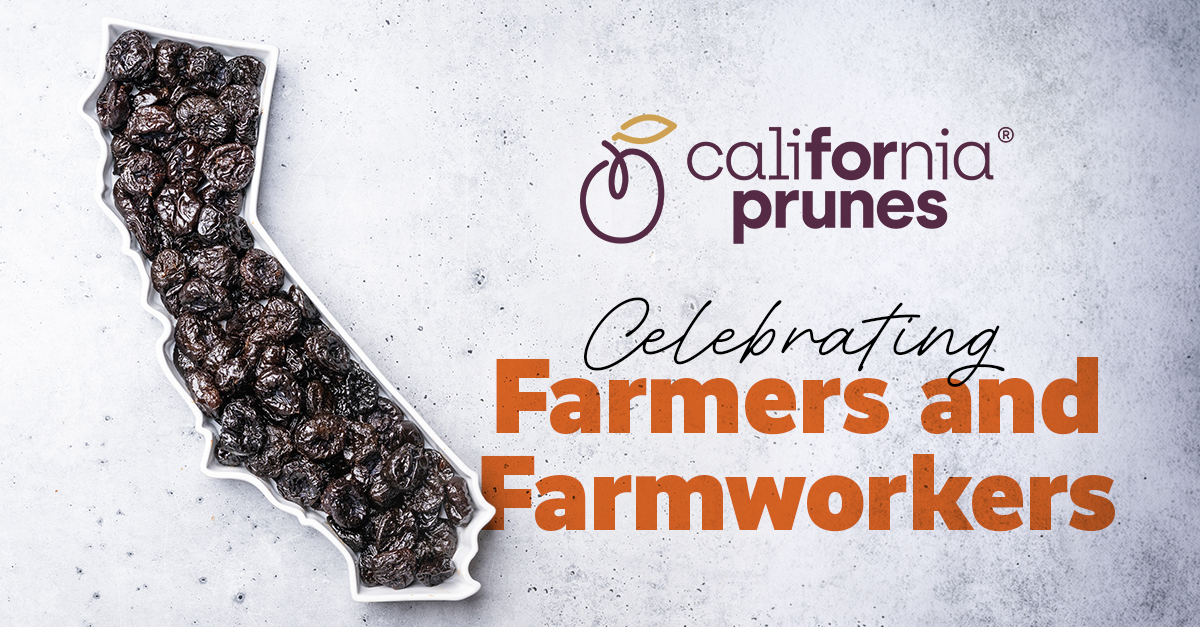
ROSEVILLE, CA - Behind every California prune are the farmers and farmworkers whose knowledge, skill, and dedication make each harvest possible. As California Farmer & Farmworker Month draws attention to the people who sustain the state's agricultural industry, it also offers an opportunity to recognize the expertise, hard work, and contributions of those who bring premium quality California prunes from orchard to tables around the world.
Generations of farming families in California now produce virtually all the nation's prunes and a significant share of the global supply, with approximately 400 growers farming more than 40,000 acres across the Sacramento and San Joaquin Valleys. These orchards reflect a rich agricultural heritage built on experience, innovation, and a shared commitment to quality.

Producing California prunes requires year-round attention and a deep understanding of the land. From winter pruning and spring bloom to orchard management, irrigation and harvest, each stage of production depends on careful planning and hands-on expertise. Farmers and farmworkers play a vital role throughout this process, helping maintain healthy orchards and ensure each crop meets the industry's high standards.

“California prunes are the result of an extraordinary amount of hard work, knowledge, and care from the people who grow and harvest them,” said Kiaran Locy, VP of Brand Strategy & Communications for the California Prune Board, in the recent release. “Our farmers and farmworkers bring extensive experience, specialized skills and a tremendous sense of pride to their work. California Farmer & Farmworker Month is an opportunity to recognize their contributions and celebrate the people who make our industry what it is today.”
Women are an important part of California's agricultural success, contributing their knowledge and expertise across orchard operations, farm management, and industry leadership. This year's California Farmer & Farmworker Month also falls during the United Nations' International Year of the Woman Farmer, bringing additional attention to the contributions of women who help sustain agricultural communities and shape the future of farming.

As California Farmer & Farmworker Month recognizes the people who make the state's agricultural success possible, the farmers and farmworkers who grow, tend, and harvest California prunes remain at the heart of the industry. Their expertise and dedication not only shape each year's crop but also help carry California's prune-growing heritage forward for generations to come.
For additional information about California prunes, visit CaliforniaPrunes.org.