
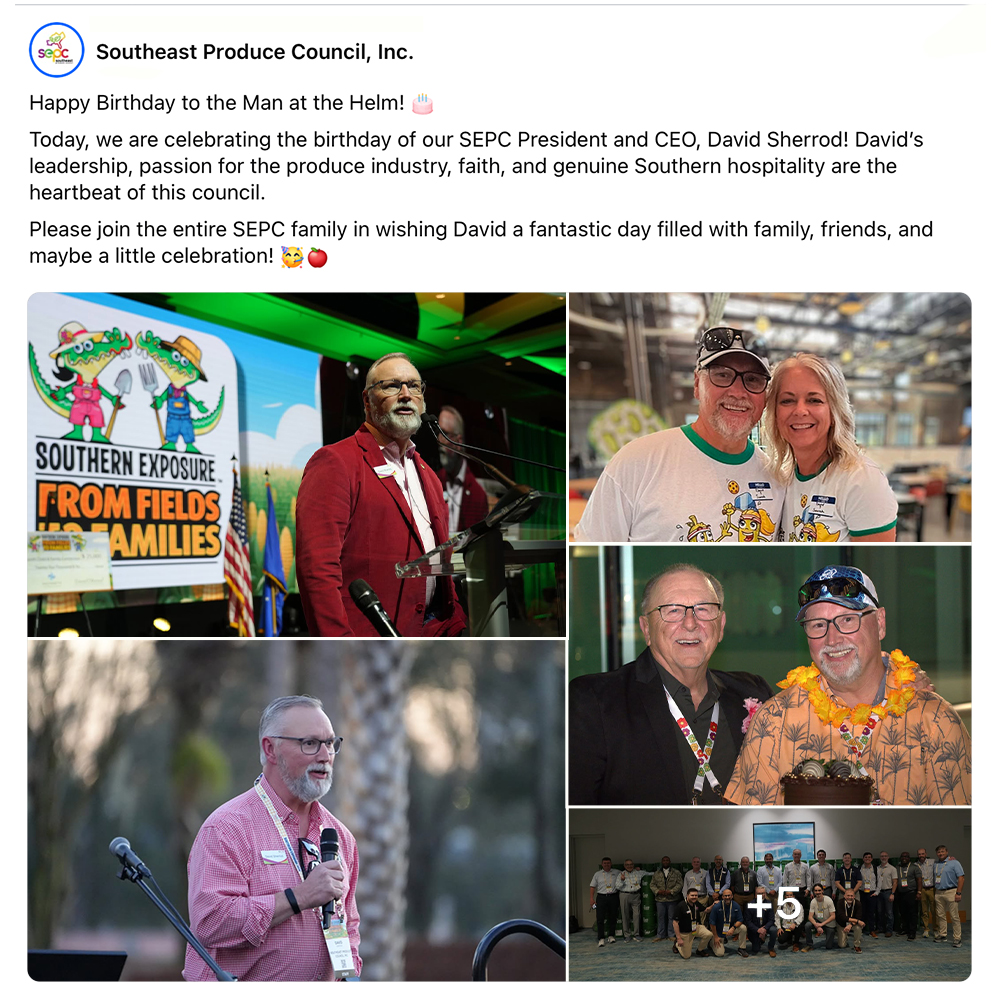
Happy Birthday to President and CEO David Sherrod!
|






















EMERYVILLE, CA - Grocery Outlet Holding Corp. announced financial results for the fourth quarter and full fiscal year ended January 3, 2026, both of which contained one additional week ("53rd week") versus the comparable prior periods. Additionally, the Company today announced a business optimization plan (the “Optimization Plan”) to improve operational execution, strengthen long-term profitability and increase cash flow generation.
Highlights for Fourth Quarter Fiscal 2025 as compared to Fourth Quarter Fiscal 2024:
- Net sales increased by 10.7% to $1.22 billion, which includes $82.4 million from the 53rd week.
- Comparable store sales declined by 0.8% on a 13-week basis.
- Gross margin was 29.7% compared to 29.5% last year.
- Operating loss was $234.8 million, which included $110.2 million in non-cash impairment of long-lived assets and $149.0 million innon-cash goodwill impairment.
- Net loss was $218.2 million, or $(2.22) per diluted share, compared to net income of $2.3 million, or $0.02 per diluted share last year.
- Adjusted net income(1) was $18.7 million, or $0.19 diluted adjusted earnings per share(1), compared to $14.5 million, or $0.15 diluted adjusted earnings per share(1) last year.
- Adjusted EBITDA(1) was $68.0 million, representing 5.6% of net sales.

Highlights for Fiscal 2025 as compared to Fiscal 2024:
- Net sales increased by 7.3% to $4.69 billion.
- Comparable store sales increased by 0.5% on a 52-week basis.
- Gross margin was 30.3% compared to 30.2% last year.
- Operating loss was $221.7 million, which included $113.8 million in non-cash impairment of long-lived assets, $45.9 million in restructuring charges and $149.0 million in non-cash goodwill impairment.
- Net loss was $224.9 million, or $(2.30) per diluted share, compared to net income of $39.5 million, or $0.40 per diluted share last year.
- Adjusted net income(1) was $75.2 million, or $0.76 diluted adjusted earnings per share(1), compared to $76.3 million, or $0.77 diluted adjusted earnings per share(1) last year.
- Adjusted EBITDA(1) increased by 7.4% to $254.3 million, representing 5.4% of net sales.
“We made progress on our strategic priorities in 2025; however, our fourth-quarter results made clear that we have more work to do, and we’re moving quickly,” said Jason Potter, President and CEO of Grocery Outlet, in the recent release. “Consumer pressure intensified, federally funded benefits were delayed, and competition grew more promotional in the fourth quarter. In response, we have begun to sharpen our focus on what matters most: delivering clearer value and a better in-store experience. We’re intensely focused on restoring the opportunistic mix to rebuild value perception with the customer and advancing our store refresh program, and we’re already seeing early, measurable improvements. At the same time, we’re closing underperforming stores, reshaping our new store growth strategy and reallocating resources to strengthen operating results and returns on capital. We are confident that we have identified the core challenges, and now have the right plans in place and the right team to execute them.”
Optimization Plan and Restructuring Plan:
To strengthen long-term profitability and cash flow generation, improve operational execution, optimize our existing store footprint and align with our disciplined new store growth strategy, in the first quarter of fiscal 2026 we conducted a strategic, financial and operational analysis of our store fleet. Following that review, on March 2, 2026, our Board of Directors adopted the Optimization Plan that provides for the closure of 36 financially underperforming stores, including the termination or sublease of the applicable store leases, the termination or sublease of a lease for a distribution center facility that we are no longer utilizing, and the termination of operator agreements with independent operators ("IOs") for the applicable store locations as well as certain other store locations. These actions under the Optimization Plan are expected to be substantially completed during fiscal 2026.
In addition, preceding the adoption of the Optimization Plan, during the reporting process for the audited consolidated financial statements for fiscal 2025, we determined that the long-lived assets of the Closure Stores were impaired, and recognized $110 million of non-cash charges in Impairment of long-lived assets on the condensed consolidated statements of operations and comprehensive income (loss).
See the full report here.

IRELAND - Marking International Women’s Day and the United Nations International Year of the Woman Farmer, Fyffes announces strong six-month results from Partnership for Good program, a collaboration between Trudi’s — Fyffes new consumer purpose-driven banana brand — and CARE International UK, with 108 business plans already developed by women in banana-growing communities.
Partnership for Good was designed to strengthen women’s autonomy, productive capacities, and resilience in banana-growing communities in Costa Rica, while enhancing household food security and overall community wellbeing.
During its first six months, 228 rural women, organised into nine community groups, enrolled and actively participated in six structured training sessions covering personal empowerment, recognition of rights, prevention of gender-based violence, leadership and assertive communication, business planning, and financial management.

By December 2025, 108 business plans had been formally submitted, demonstrating strong engagement and ownership of the programme's economic empowerment component.
Proposed enterprises include agricultural production (vegetables, fruit, eggs, and livestock), service-based activities (food preparation, beauty services, and tailoring), value-added food processing, and small-scale retail operations.
With seed capital distribution scheduled for the next phase this year, implementation will focus on enterprise launch, adoption of climate-smart agricultural practices, and measurable improvements in income generation, empowerment outcomes, and household food security.
Evidence-Based Approach to Empowerment
An initial baseline study established reference data to measure progress in women’s leadership, economic autonomy, and household food security.
Key baseline findings include:
- Only 1% adopted at least three sustainable and climate-resilient agricultural practices.
- 15% reported awareness of at least three of their human rights.
- 77% of households reported some degree of food insecurity.
- 79% of women and youth reported confidence in their negotiation and communication skills.
- 88% reported active participation in household decision-making on agricultural production and income use.
These findings have directly informed program priorities, including strengthened technical capacity building, entrepreneurship development, and the future implementation of household kitchen gardens and climate-smart agriculture practices.

Responsible Sourcing and Shared Value
For Fyffes, Trudi’s, and Partnership for Good represents our commitment to responsible strategic sourcing, advancing human rights due diligence with integrity, and empowering sourcing communities to build a more inclusive and sustainable economic future across our agricultural supply chains.
In a regulatory and market environment where European and North American stakeholders and consumers increasingly demand transparency, traceability, and measurable social impact, the programme contributes to advancing gender equity, strengthening climate resilience, and fostering long-term community prosperity in sourcing regions.
Fyffes reaffirms its commitment to advancing women’s economic empowerment as a cornerstone of sustainable, resilient and equitable food systems.

CINCINNATI, OH - The Kroger Co. reported its fourth quarter and fiscal year 2025 results, provided 2026 guidance, and shared progress on key priorities.
In Kroger’s recent release, the retailer emphasized that its growth strategy is built around its pillars of fresh, brands, personalization, and eCommerce.
Comments from CEO Greg Foran
"Kroger delivered a strong finish to the year, with improving market share trends and solid sales growth that reflect meaningful progress in strengthening the business.
We have the right foundation in place, and I'm focused on making it even stronger by delivering more value to customers, improving the customer experience in stores and online, and driving cost savings and productivity to fund our growth."
Fourth Quarter Financial Results
Total company sales were $34.7 billion in the fourth quarter compared to $34.3 billion for the same period last year. Excluding fuel, sales increased 2.1% compared to the same period last year.
Gross margin was 23.1% of sales for the fourth quarter compared to 22.7% for the same period last year. The result was primarily attributable to sourcing improvements, lower supply chain costs, better fuel margins, decreased depreciation, and lower shrink, partially offset by price investments and the mix effect from growth in pharmacy sales, which has lower margins.
The FIFO gross margin rate, excluding rent, depreciation and amortization, and fuel, was flat compared to the same period last year. The result was primarily attributable to sourcing improvements, lower supply chain costs, and lower shrink offset by price investments and the mix effect from growth in pharmacy sales, which has lower margins.
The LIFO charge for the quarter was $11 million, compared to a LIFO charge of $30 million for the same period last year.
The Operating, General and Administrative rate, excluding fuel and adjustment items, increased 21 basis points compared to the same period last year. The increase in rate was primarily attributable to cycling real estate gains from a year ago and labor investments to improve the customer experience, partially offset by lower incentive plan costs and improved productivity.

Fiscal 2025 Financial Results
Total company sales were $147.6 billion in 2025 compared to $147.1 billion in 2024, which included $2.0 billion from Kroger Specialty Pharmacy sales. Excluding fuel and Kroger Specialty Pharmacy in both periods, sales increased 3.0% compared to last year.
Gross margin was 22.9% of sales for 2025 compared to 22.3% last year. The improvement in rate was primarily attributable to the sale of Kroger Specialty Pharmacy, sourcing improvements, lower fuel sales, lower shrink, and lower supply chain costs partially offset by the mix effect from growth in pharmacy sales, which has lower margins, and price investments.
Comments from CFO David Kennerley

"For 2026, we expect identical sales without fuel growth of 1.0% to 2.0%, adjusted FIFO operating profit of $5.0 to $5.2 billion, and adjusted EPS of $5.10 to $5.30. Our identical sales without fuel guidance include an approximately 130 basis point headwind from the Inflation Reduction Act.
This guidance reflects our ability to invest more aggressively in value for customers while improving gross margins, funded by eCommerce reaching profitability, meaningful procurement efficiencies, and productivity gains across the business."
See the full release here.
|














MINNEAPOLIS, MN - At its financial community meeting, Target Corporation unveiled its multi-year strategy under Chief Executive Officer Michael Fiddelke to accelerate its return to growth. The strategy includes plans to refresh the store experience across the chain, invest in store payroll and training to elevate the guest experience, and strengthen key areas of the assortment.

"This new chapter of growth at Target is defined by clear choices and rooted in a deeper understanding of our unique lane in retail, the guests we serve, and the areas where we're distinctly positioned to win," said Fiddelke in the recent release. "This work is underway, and by putting style, design, and value at the center of every decision, we're making big changes to lead with a trend-forward assortment, elevate the guest experience, accelerate with technology, and equip our teams to deliver the most delightful experience in retail, for today and over the long term."
Target's Strategic Priorities
At the center of this work are four growth priorities that will guide Target's decisions and investments in 2026 and beyond:
- Lead with merchandising authority by setting trends with differentiated, culturally relevant assortments that win in style, design and value.
- Elevate the guest experience by investing in digital discovery and the in-store experience while strengthening loyalty and engagement.
- Accelerate technology to help teams move faster and create more personalized, joyful experiences for guests.
- Strengthen team and communities by investing in training and career growth for teams and building on Target's long-standing commitment to communities.

Investing to Accelerate Growth
In 2026, Target is planning to make an incremental $1 billion operating investment to deliver a more consistent, elevated experience for guests. This includes:
- More changes within all stores than any year in the last decade, including updated floor plans and enhanced in-store displays across the chain to spotlight top items, new styles and key partnerships.
- Hundreds of millions of dollars in additional store payroll and training in 2026. The investment is designed to drive greater consistency and help teams deliver an in-store experience centered on being delightful, inspiring and easy.
- Increasing spend on brand marketing and new technology, including AI.
Target also plans to increase its capital investment plans by more than $1 billion in 2026 — for a total of approximately $5 billion — to support new stores and ongoing remodels, technology and supply chain investments. The retailer expects to open more than 30 new stores this year as part of its path to 300 new stores by 2035, while investing in over 130 planned full-store remodels. Later this month, Target will mark a key milestone with the opening of its 2,000th store in Fuquay-Varina, North Carolina.

Elevating key categories and scaling differentiated offerings
With a clear view of the value Target can deliver for busy families — which it defines as digitally savvy, style-focused and value-conscious consumers — the retailer is making more intentional choices and investments in key product areas where its differentiation in style, design, value and experience will accelerate growth. In 2026, Target will:
- Food and beverage: Further infuse style and design throughout the grocery experience while allocating more space for this category as the company builds new stores and remodels existing locations. Increase the amount of newness across the assortment by nearly 50% and lead with innovation across owned, emerging and national brands. In May, Target plans to become one of the first national retailers to offer families a cereal assortment made without certified synthetic colors.
- Health and wellness: Strengthen its position as a destination for everyday wellbeing by building on the 30% wellness assortment expansion announced in January. The retailer plans to add thousands of new items and even more exclusives, as well as increase vitamin and nutrition offerings by about 20% chainwide in April.
See the full release here.

REEDLEY, CA - Family Tree Farms is proud to announce Chris Taylor as UK & Ireland Commercial Director, effective January 1, 2026. Taylor will oversee commercial strategy and retail partnerships across the UK and Ireland, supporting continued expansion in these key markets.

Taylor brings more than 21 years of experience across retail, consultancy, and fresh produce leadership. His background includes senior commercial roles within citrus and berry categories, with a strong track record of building successful retail programs and customer relationships.

“Over the time I’ve spent with Family Tree Farms, I’ve seen firsthand the strength of the business, the people behind it, and the long-term vision in place,” said Taylor in the recent release. “I’m proud to continue building on that foundation and excited about the growth ahead as we further strengthen our partnerships across the UK and Ireland.”

Andy Muxlow, Owner of Family Tree Farms, commented: “Chris has demonstrated exceptional leadership and commercial insight. His promotion reflects our confidence in his ability to strengthen key customer relationships and lead our UK and Ireland strategy forward.”

Doug LaCroix, VP of Sales and Marketing, added: “Chris brings a deep understanding of the retail landscape and a collaborative mindset. His leadership will be instrumental as we continue expanding our berry and fruit programs across the region.”

SALISBURY, NC - As part of its commitment to helping end hunger, Food Lion Feeds is launching its annual three-week Orange Bag campaign in stores and online, inviting customers to turn a bag of fresh, delicious navel oranges into care for their communities.
Since the campaign began in 2019, Food Lion customers have helped provide more than 41 million meals through the purchase of specially marked Food Lion brand orange bags and customer donations. The Orange Bag campaign runs from Feb. 25 – March 17, 2026, and benefits Feeding America®, the nation’s largest domestic hunger-relief organization, and partner food banks throughout the towns and cities Food Lion serves.

Customers can support the campaign by purchasing specially marked bags of Food Lion oranges, making cash donations in-store or online via Food Lion To Go, donating a specific dollar amount at checkout or rounding up their purchases to support hunger-relief efforts in their local communities.
For every bag of oranges sold, Food Lion Feeds will donate the monetary equivalent of five meals to Feeding America and partner food banks, up to 2 million meals. Donations to each local food bank are based on the number of eligible bagged oranges sold within each food bank’s service area. Additionally, 100% of all cash donations directly support Feeding America and partner food banks.

“Food insecurity doesn’t take a season off,” said Kevin Durkee, Manager, Food Lion Feeds, Food Lion, in the recent release. “The Orange Bag campaign gives customers an easy way to support their communities while bringing high-quality produce to their families. Every bag purchased helps local food partners provide nutritious food that individuals and families can choose and use to set them up for success in life.”
The Orange Bag campaign is one of several annual initiatives led by Food Lion Feeds to support hunger-relief efforts. The seventh season of Food Lion Feeds’ Score to Give More is also underway with 55 collegiate basketball programs across Food Lion’s footprint helping provide meals for every free throw made. So far this season, the participating collegiate teams have completed more than 15,000 free throw attempts, resulting in more than 1.5 million meals for Feeding America partner food banks.
Since 2014, Food Lion Feeds has helped provide more than 1.5 billion meals to individuals and families and has committed to donating 3 billion meals by 2032. For more information on Food Lion Feeds’ commitment to end hunger, visit www.foodlion.com/feeds.

WEST GROVE, PA - The I Love Produce family is proud to announce the sponsorship of Love Foosball Team. The adapted Paralympic foosball team from Mendoza wrote a big chapter in Sicily, where they competed from February 6 to 8, 2026, in the Club World Cup, organized by the International Table Soccer Federation. The Argentine delegation—composed entirely of people from Mendoza—caught attention from day one: it was the first Paralympic presence from the Americas at an event of this caliber.
The Love Foosball Team advanced to the quarterfinals, where it was eliminated by ASD in Movimento 1, a team that went on to lift the trophy. The tournament brought together competitors from 25 countries, including Olympic and Paralympic athletes, and took place in front of a large audience and a highly competitive atmosphere. The team is comprised of 3 players: Mario Colque, José Luzuriaga, Mauricio Cantalejos, and their 2 coaches, Sergio Eduardo Perez and Javier Sergio Longone.

The I Love Produce (ILP) founders Jim Provost and Neil Millman have spent much time in the region where they got to know the foosballers. According to the recent release, I Love Produce (ILP) procures garlic from the Mendoza Region of Argentina, and the founders have spent much time in the region where they got to know the local foosballers and began to support their program.