Wraparound

|

IDAHO FALLS, ID - Des Hague, CEO of Potandon Produce and RäFoods, announced a year-long partnership with Read Ahead as part of a broader Living Nutrition strategy focused on creating meaningful impact for families and communities. Read Ahead is a New York City nonprofit dedicated to helping elementary school students strengthen literacy skills and confidence through reading-based mentoring.
The partnership will be delivered through Sprout Cares, a community-impact initiative Potandon Produce developed through its exclusive marketing relationship with Green Giant Fresh potatoes and onions. RäFoods, a leader in living nutrition, will contribute financially and participate in the broader program.

Founded in 1991, Read Ahead pairs adult volunteers with New York City elementary school students for weekly reading and mentoring sessions. Its work focuses on helping students strengthen literacy skills, build reading confidence and develop meaningful mentoring relationships that support success in school and beyond.
The contributions from Potandon Produce and RäFoods will help Read Ahead provide programming that gives elementary school students the confidence and literacy skills they need to succeed in school and beyond.
"Read Ahead is thrilled to have the support of a legacy brand like Potandon Produce, along with the support of the Green Giant Fresh brand and the commitment of RäFoods," said Zoe Henriquez, Executive Director of Read Ahead, in the recent release. "Our work to build the reading and literacy confidence of elementary school students directly aligns with the Sprout Cares initiative, as together we look to grow our students' skills."
"Potandon Produce and RäFoods are each committing to the Read Ahead mission," said Hague. "Our hope is that we can help accelerate the good work they are already doing and make a meaningful difference in a child's life. Our companies spend every day thinking about growing and bringing fresh, nutritious food to families. This partnership gives us an opportunity to extend that idea of growth by helping children build their reading skills, confidence, and relationships with mentors. Just as importantly, we want to go beyond financial support by using our reach to introduce more people to Read Ahead and the work they are doing."

GROW SOMETHING GOOD
The year-long commitment will also serve as the foundation for a broader consumer-facing initiative under the message "Sprout Cares presents Grow Something Good."
Potandon Produce and RäFoods expect to begin planning the activation in October. The program will include in-store signage and QR-enabled materials that introduce shoppers to Read Ahead, explain its work in childhood literacy and mentoring, and give consumers an opportunity to support the organization.
"Grow Something Good is about taking the partnership beyond a donation and giving consumers a way to become part of it," said John Rota, Chief Marketing Officer of Potandon Produce and RäFoods. "Read Ahead already does the important work. Our opportunity is to use these brands' reach to introduce more people to that work and make it easy for them to participate. That is exactly what we want Sprout Cares to do."
Rather than connecting individual retail locations with individual schools, Grow Something Good is being developed as a unified campaign supporting Read Ahead and its broader mission. The consumer activation could launch during the holiday shopping period as program details and retail participation are finalized.
Specific retail partners and launch timing will be announced as plans are finalized.

NORTH AMERICA - Eighteen years watching this industry, and if you asked me what actually moves produce from a field to a family, I wouldn't say trucks, or apps, or price. I'd say the relationship between the person who grows it and the person who buys it. That handshake, repeated across a hundred desks and a thousand show floors, is the machine the whole business runs on. Time and again, it has proven more durable than whatever system happens to sit between the two parties in a given year.
Lately I'm not sure it's holding the way it used to. Call it a relationship recession: a slow contraction you won't find in any sales report, because the thing shrinking is trust. This is not to negate those that are doing it right, finding the balance between efficiency and trust, the handshake and the spreadsheet, the phone call and the contract. Many are, and we should look to those for guidance.

Everything in buying now pushes the other way. Portals, spot buys, reverse auctions, and the RFP that most retailers now run on: systems built to make the deal cleaner, faster, easier to measure. There is nothing wrong with any of them on their own. An RFP can take real friction out of the annual back-and-forth. But a system, especially in our business, is only ever as good as the relationship it sits on top of. Run it over trust that already exists, and it streamlines a good partnership. Run it in place of one, and it just wraps a tidy process around a race to the bottom, shrinking years of working history to a spec and a number.

That is the difference no software has closed: the call that saves a shipment before it turns into a claim, the benefit of the doubt on a rough week, the grower who plants on a handshake because he knows the order will be there. None of it scales. It is slow, and it is human, and that is exactly why it is worth more, not less, in a market trying to automate it away.
But every recession turns, when somebody decides the relationship is worth investing in again. The cost of entry never went up. Pick up the phone. It is still the best technology this industry has.
SAN FRANCISCO, CA - Instacart, a leading grocery technology company, and Dollar General Corporation, America's general store, announced a new partnership to offer same-day delivery of Dollar General's everyday essentials through the Instacart App and website. The partnership will launch with a pilot at approximately 7,000 Dollar General and pOpshelf stores in six states in the coming weeks with plans to expand to approximately 20,000 stores across 48 states this fall.

Through the partnership, customers will be able to shop Dollar General's broad assortment of affordable products on Instacart, including food and snacks, household essentials, and health and beauty products - with delivery in as fast as one hour.

"Dollar General's vast footprint and longstanding commitment to affordability make them an important addition to the Instacart Marketplace," said Ryan Hamburger, Chief Commercial Officer at Instacart. "As we expand this partnership to approximately 20,000 Dollar General and pOpshelf stores, we'll help provide customers in communities across the country with even greater access to affordable food and everyday essentials, with the convenience of same-day delivery."

"At Dollar General, our mission is Serving Others, and we continually look for new ways to provide customers with the value and convenience they count on," said Tony Rogers, senior vice president and chief marketing officer at Dollar General. "Our partnership with Instacart provides another convenient way for customers to access affordable food, household essentials and other products they need while saving them valuable time."
Dollar General will join more than 2,200 national and local retail banners on the Instacart Marketplace.
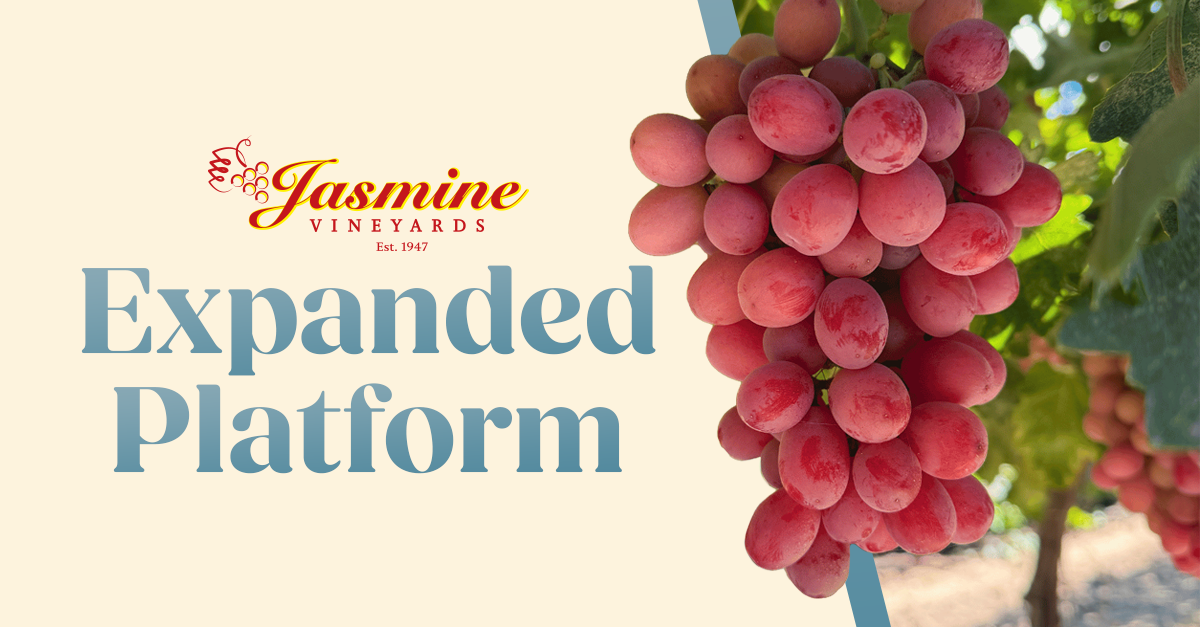
DELANO, CA - Jasmine Vineyards is taking quality control to a new level, offering its partners a look at the grower’s daily Quality Control (QC) reports through its new Live Harvest Feed. Elevating the supplier’s Fresh Alerts™ platform, the feed puts Jasmine Vineyards’ reports on public display, giving buyers a comprehensive, real-time view of the harvest.

“The goal with this upgrade was to make it easier for buyers to inspect the fruit shipping out,” shares Jon Zaninovich, President. “With our new Live Harvest Feed, our retail partners can essentially stand right next to us in the packhouse. They see the Brix, the berry size, and the crunch from anywhere in the world, giving them total confidence in what they are buying.”
The feed updates daily right out of the packhouse, with a snapshot shared in the company’s weekly Fresh Alerts emails. Partners simply click “QC Report” to inspect the fruit, then click “Request” to order pallets straight from that specific harvest.

“Putting these reports on a public feed proves the consistency we work all year to grow,” Jon explains. “It lets the fruit speak for itself. The response from buyers has been fantastic, as it completely eliminates the back-and-forth time spent requesting and emailing reports.”
This live view also allows Jasmine Vineyards’ partners to witness this year's extra-plentiful harvest.
“We kicked off this season two weeks ahead of schedule back in June, giving us the perfect runway to test and refine the feed,” adds Jon. “From our first picks of Summer Crunch and Sweet Globe, through to mid and late-season varieties like Sweet Celebration, Autumn Kings, and Autumn Royals, our retail partners have tracked the crop's quality every step of the way.”

As transparency becomes increasingly important for retailers, this unique development gives buyers a competitive advantage before the fruit is even en route to their stores.
For more fresh produce-centric updates, leave a tab open to ANUK!
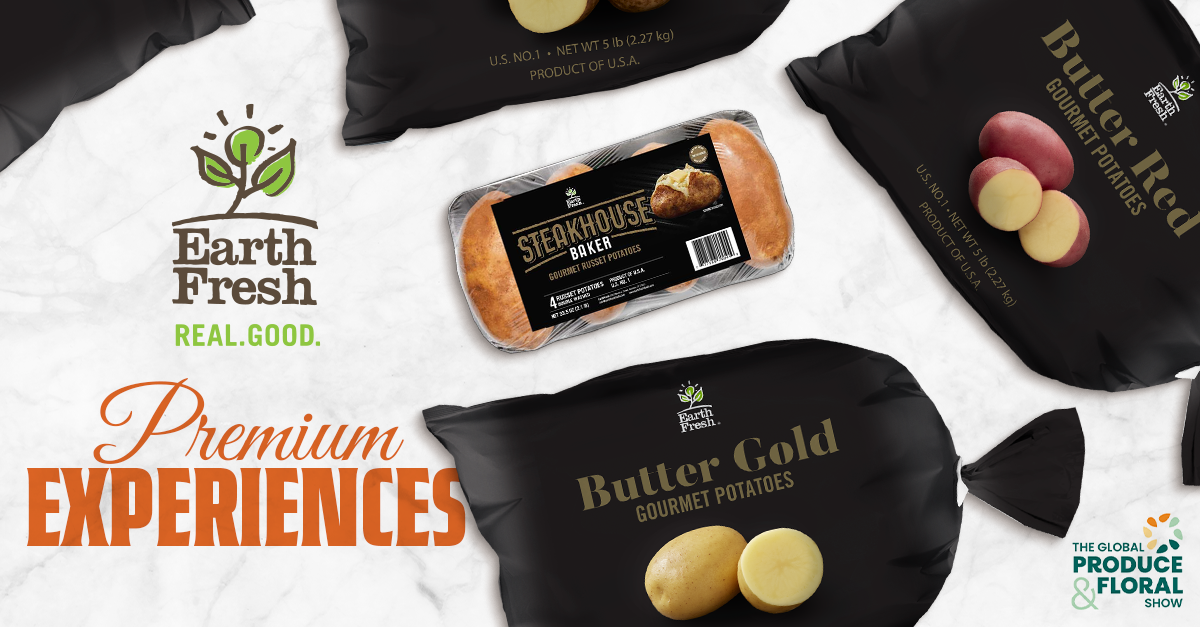
HOUSTON, TX - What’s new in the potato space? Attendees of the Global Produce & Floral Show will soon find out, as EarthFresh is bringing potato innovation to the forefront of retailers’ minds this October.

“We’re always looking ahead to what’s next, with new innovations in development designed to bring more choice, convenience, and premium experiences to the fresh produce category,” shares Jessica Anderson (Hughes), Vice President of Marketing and Innovation. “From new varieties to convenient formats, we’re continuing to find new ways to bring fresh, differentiated products to shoppers, and create new opportunities for our retail and foodservice partners.”
EarthFresh is bringing a variety of high-quality innovations to the show floor this year, including:

“The GPFS is an ideal environment to bring these products to life because it allows customers to not just see the innovations we’re working on but also experience them firsthand,” Anderson adds. “Taste, quality, and convenience are ultimately what drive adoption, so giving buyers and industry partners an opportunity to sample the products and see how easily they can fit into everyday meals is incredibly valuable to us. It’s also an opportunity to demonstrate how EarthFresh continues to evolve the fresh produce category in response to changing consumer expectations, from greater convenience to more premium products and elevated tasting experiences.”
EarthFresh’s Global Produce & Floral Show showcase reflects some of the key trends driving demand in the potato sector.

“We’re seeing continued evolution in the fresh potato category as consumers increasingly prioritize flavor, convenience, and variety,” Jessica says. “One example is the growth of yellow-flesh potatoes, which have a naturally rich flavor and creamy texture. According to 2025 Nielsen data, the U.S. yellow potato segment has more than doubled over the past eight years, growing from $284 million to $598 million. That shift is creating opportunities for innovation and premiumization within a category that has traditionally been viewed as more commodity-driven. It’s also helping drive programs like EarthFresh Butter Potatoes, which were developed to deliver an elevated eating experience through exceptional flavor, texture, and cooking performance. Consumer research conducted by IMI International ahead of the launch reinforced that opportunity, with 85 percent of U.S. shoppers and 83 percent of Canadian shoppers indicating positive purchase intent.”
In less than a year, EarthFresh Butter Potatoes have made their way into more than 4 million households, with acreage increasing 40 percent to support year-round supply. This growth, Jessica notes, reflects an opportunity for retailers to provide shoppers with more reasons to trade up within a familiar category, offering meaningful differentiation rather than simply competing on price.

“At the same time, convenience continues to reshape the fresh produce aisle,” Jessica continues. “Consumers want to eat fresh, high-quality food, but they’re increasingly looking for products that reduce prep time and make it easier to get a great meal on the table. For us, that means thinking beyond the potato itself and looking at how packaging, formats, and value-added products can make fresh vegetables work harder. Our Fast. Fresh. Gourmet. lineup is one response to this evolution, with formats including oven and grilling trays and air-fryer packs. We see continued opportunity ahead for fresh produce solutions that bring together great taste, premium quality, and everyday convenience for today’s shoppers.”
Attendees can explore the Fast. Fresh. Gourmet. lineup, EarthFresh Butter Potatoes, Steakhouse Baker Trays, and 2 lb organic bags for themselves at booth #3343 during the show!

NORTH AMERICA - For fresh produce, El Niño doesn't have a single impact. The effects are many. As weather patterns shift, geography, crop, timing, and intensity of precipitation can turn one climate pattern into excessive water for one grower and too little for another. The only promise: it will be felt widely. Keeping the lines of communication open between buyers and suppliers will be essential when planning promotions, campaigns, and holidays. A good partnership, after all, can weather any storm.
And this El Niño is one to watch. NOAA currently puts the chance of El Niño becoming very strong this fall and winter at greater than 90 percent, with a 75 percent chance during October–December of reaching a historic threshold that would exceed the strength of previous El Niño events dating back to 1950. But there is caution to apply: Even at that magnitude, NOAA insists that typical El Niño impacts become more likely, but are not guaranteed.

To get a general outlook of what the U.S. may have on its El Niño radar, let's start in California. NOAA explains that El Niño alters the jet stream and tends to bring cooler, wetter winter conditions across the southern tier of the United States, including parts of California. That creates the potential for a more active southern storm track. The rub: More water can benefit wells and reservoirs, but excessive rain can also mean saturated fields, flooding, harvest interruptions, planting delays, and added quality or disease pressure.

“A wetter winter could be beneficial for California avocado growers by improving soil moisture and water supplies heading into the growing season,” Ken Melban, President of the California Avocado Commission, shares with me. “At the same time, El Niño doesn’t guarantee above-average rainfall, and the timing and intensity of storms will be important.”
Ken expands on those conditions, adding that California avocado growers are accustomed to dealing with considerable variability in weather from year to year. Heavy or prolonged rain can create challenges with drainage, erosion, and grove access, particularly in hillside growing areas.
“Ultimately, growers will be watching not just how much rain we receive due to El Niño, but also when and how it falls, as that will determine the impact on the state’s groves,” Ken describes.

Move north to the Pacific Northwest, and the weather pattern shifts. USDA’s Northwest Climate Hub says El Niño typically brings warmer, drier fall and winter conditions to Washington, Oregon, and Idaho. Here, snowpack becomes particularly important. Warmer, drier winters can mean less precipitation overall and more of what does fall arriving as rain rather than snow, potentially decreasing runoff and summer water availability.
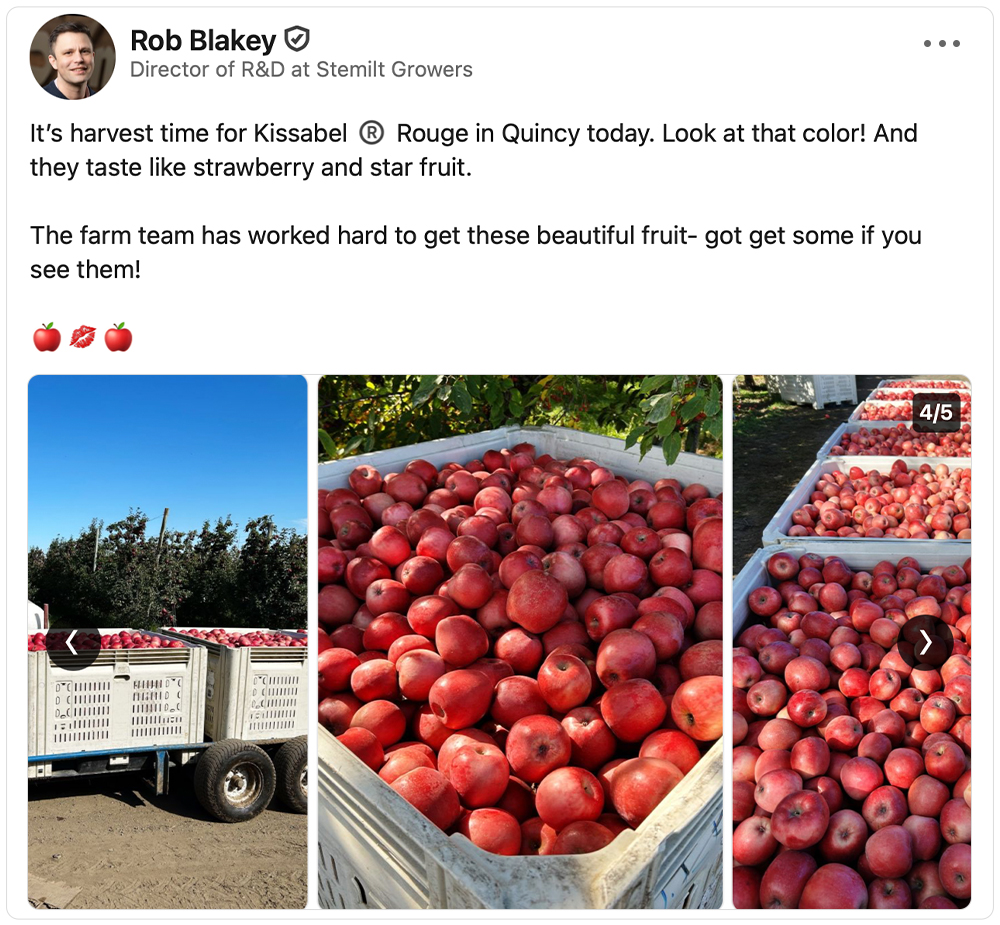
Brianna Shales, Marketing Director at Stemilt, offers some context from last year and a bridge into the current season, highlighting possible outcomes to keep an eye on. Washington experienced a low-snowpack winter last year that led to diminished water supplies and drought conditions, especially in southern growing areas of the state where water is already constrained, she begins.

“The other El Niño effect was earlier harvest timing, and that happened this year across West Coast crops, including our apples, pears, and cherries,” Brianna explains. “Overall growing conditions have been favorable for these fruits as we did not experience extreme heat this summer, leading to great color and flavor development. As we look forward to the 2027 crop, snow is important for snowpack and water storage. We generally have no issues meeting chill requirements for cherries in Washington. There could also be concerns where bloom occurs early, leading to spring frost vulnerability. We saw both frost and hail as spring issues this year, which reduced the apple crop in some areas.”
Brianna knows weather is something we can't control, and growers will have to adapt to what Mother Nature gives them.
“However, Washington State still has great irrigation and reservoir networks, clean water sources like the Columbia River, and great soil and arid climate conditions that help us routinely produce high-quality fruit. We remain optimistic that we'll be able to work with Mother Nature to do that in an El Niño year!”

Move the lens down to Arizona and the Desert Southwest, and timing takes on a different significance. Winter vegetable production makes the possibility of rain during critical planting or harvest windows particularly important. NOAA notes that the southern tier of the United States tends to experience wetter-than-average conditions during El Niño winters, although these typical effects are not guaranteed in any individual season. In a region so important to winter vegetable supply, the timing of any significant weather will be something to watch closely.
The reach of this 2026–2027 El Niño extends into the Southeast as well, increasing the odds of above-average precipitation across the southern states. USDA’s Southeast Climate Hub says El Niño enhances the subtropical jet stream and is associated with wetter conditions across the South. In its separate overview of Southeastern croplands, the Climate Hub notes that changes in when and how much rain falls can affect crop production. How will these unfold? That is the question.

“While there's been plenty of attention paid to the ‘super El Niño’, we're cautious about drawing conclusions too far in advance. The reality is that no two seasons are ever the same. What we can say is that planting conditions have been favorable to this point, and the absence of hurricane activity has been welcomed. We're also entering the season with great varieties that have shown strong field performance, particularly under challenging weather conditions. Our focus remains on managing what we can control and adapting as conditions evolve throughout the season,” Nick Wishnatzki, Public Relations Director at Wish Farms, explains.
What we are watching now is just how far the pendulum will swing in either direction. Growers have been preparing and are doing what they can to mitigate the impacts, but managing expectations across industry services, operations, and support systems will be essential. Once again, resilience may prove to be one of the greatest strengths of this amazing industry.
|