Email horizontal


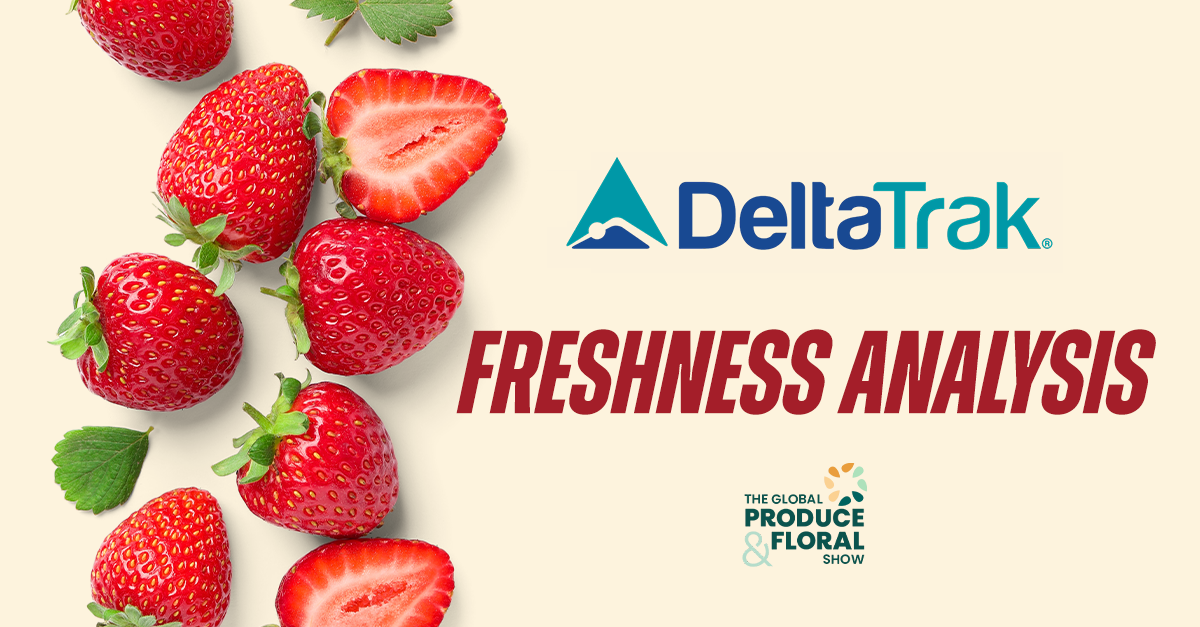
PLEASANTON, CA - Americans spend about $5.4 billion annually on strawberries, according to the California Strawberry Commission, but quality problems threaten that value. In an analysis of online strawberry reviews from a major national grocery retailer, DeltaTrak found that 78% mentioned mold or rot, highlighting a quality issue that can begin long before berries reach a shopper’s refrigerator.
For growers, shippers and retailers, those complaints reflect lost value and damaged shopper trust, often from problems that start in the supply chain.

“Long before mold becomes visible, strawberries may have already lost valuable shelf life,” said Dr. Jeffrey K. Brecht, emeritus professor of postharvest physiology at the University of Florida. “Cooling promptly after harvest and maintaining proper temperatures throughout distribution help preserve quality. Understanding how much shelf life remains gives suppliers and retailers a better opportunity to act before the fruit deteriorates.”
To examine shelf-life loss during distribution, DeltaTrak analyzed more than 8,000 inbound berry shipments using UBQ Freshness Index™ (FreshIDX™), which combines temperature history, transit events and commodity-specific biological models to estimate remaining shelf life. The analysis found that 31.5% of strawberry loads had lost at least half a day of remaining shelf life by the time they reached the distribution center.

For suppliers and retailers, that means less time to inspect, distribute and sell berries before quality declines. Delays in cooling, transportation or receiving can shorten the selling window before mold or other problems become visible, reducing opportunities for full-price sales and increasing markdowns and shrink.
DeltaTrak modeling estimates that recovering just one day of usable strawberry shelf life could improve revenue retention by approximately 27%. The model evaluates how earlier prediction of mold growth can enable retailers to preserve more full-price sales while reducing losses associated with markdowns and product removal from store shelves.

“This analysis puts a financial value on freshness,” said Karl McDermott, chief SaaS revenue officer at DeltaTrak. “For strawberries, one additional day of advance warning can mean more time to sell at full price and less product lost to markdowns or waste. The industry has become very good at tracking the journey. The next step is understanding what that journey did to the product and acting on that information before value is lost.”
FreshIDX turns shelf-life estimates into practical guidance for produce teams. Using those estimates, teams can:

FreshIDX is delivered through the UBQ Network powered by DeltaTrak, a digital ecosystem connecting growers, shippers, logistics providers, buyers and retail store managers with meaningful produce quality and shelf-life data to make informed decisions to reduce shrink and increase profitability. In the two years since opening its membership program, the network has grown to support more than 1,000 organizations worldwide.
To learn more about FreshIDX or the free UBQ Network membership program, visit ubq.network or stop by booth 2826 at the IFPA Global Produce & Floral Show, Oct. 15–16.


NEW ZEALAND - Zespri’s final charter shipment of the 2026 New Zealand kiwifruit season has departed the Port of Tauranga and is on its way to Shanghai.
The vessel, Whero, is carrying more than 1.7 million trays, or 6,120 tonnes of Zespri SunGold Kiwifruit for consumers in China. It’s the 57th charter vessel for Zespri to help deliver a record crop of around 225 million trays (810,000 tonnes) this season, with final container shipments to depart New Zealand in the coming weeks.
CEO Jason Te Brake says the sailing of the Whero marks an important milestone as the industry enters the final stages of the New Zealand season.

“The departure of our final charter is an opportunity to recognise the significant effort from growers, post-harvest, logistics partners and our teams around the world to deliver another large crop to consumers in more than 50 markets.
“Sales have been encouraging in Europe, while North America continues to perform well. In Greater China, our in-market teams worked hard to capitalise on the recent Mid-Autumn Festival where we saw strong sales, with fruit from the Whero due to arrive in market in the coming weeks.

“Despite a more challenging global trading environment and a more competitive fruit category, demand for Zespri Kiwifruit has remained strong across many of our key markets, helping deliver strong value back to growers and shareholders.
“The strong demand we've seen this season reflects the value consumers are placing on high-quality, nutritious fruit and the efforts of our teams and partners across the supply chain. It has also been supported by the rollout of our new global brand platform, Grown for Good, across our core markets, which champions natural nutrition and the role fruit can play in supporting healthier lives.”
With the New Zealand season drawing to a close, Zespri’s focus is turning to ensuring a smooth transition to its Northern Hemisphere-grown fruit and preparing for the 2027 season.

“We’re expecting around 36 million trays (129,000 tonnes) from our Northern Hemisphere growing regions this season. This includes 28 million trays (more than 100,800 tonnes) of Zespri SunGold and a further eight million trays (28,800 tonnes) of Zespri Green Kiwifruit, with the transition to our Northern Hemisphere SunGold fruit getting underway in Europe in the coming weeks week,” says Mr Te Brake.
“Working with our Northern Hemisphere partners to provide our consumers with 12-month supply is a key part of our strategy for maximizing long-term value back to growers.”
FRANCE - Fyffes and Miles Import SA have announced a new three-year strategic partnership in France, bringing together the complementary strengths of two experienced fresh produce businesses to develop opportunities in the French market.
Under the agreement, Miles Import will become the sole distributor for Fyffes in France. The two companies will work together to strengthen the supply and commercial development of bananas and pineapples in the French market.

The partnership combines Fyffes’ international sourcing capabilities and extensive experience in the production, procurement and supply of high-quality tropical fresh produce with Miles Import’s established commercial capabilities, customer relationships and knowledge of the French market.
For Fyffes, the agreement represents an important step in developing its presence in France, where the company sees opportunities to bring its fresh produce expertise, responsible sourcing approach and international supply capabilities to more customers.

Frank Burkhardt, Chief Commercial Officer at Fyffes said: “France is an important fresh produce market and one where we see significant potential for Fyffes. We recognise that succeeding in a market requires strong local expertise, relationships and an in-depth understanding of customers, which is why we are delighted to enter this strategic partnership with Miles Import.
“Fyffes brings more than a century of experience in fresh produce and an extensive international supply network, while Miles Import brings strong knowledge of the French market and established relationships with customers. We believe those strengths are highly complementary.
“This is very much a long-term partnership. Our ambition over the next three years is to build the business together by providing French customers with quality fresh produce, reliable supply and a high level of service.”

Guy Lesvenan, Chairman and CEO of Miles Import SA said: “When I founded Miles Import in 1994, our growth was initially built on strong expertise in citrus fruits and grapes. In the 2010s, we took another step forward by specializing in air-freighted mangoes for the French market.
Since 2020, we have proudly developed the Fyffes brand across the French retail, foodservice and food processing sectors. Our partnership is built on a shared vision: a commitment to quality, traceability, transparency and long-term relationships.
Today, I am particularly proud to announce that Miles Import is becoming the sole distributor of Fyffes products in France and will now lead the development of Fyffes bananas in France, in addition to its ongoing pineapple business. This milestone reflects six years of mutual trust and our shared ambition for the French market.”
The partnership reflects both companies’ commitment to developing resilient, long-term relationships across the fresh produce supply chain and responding to the evolving needs of customers.
Fyffes and Miles Import will begin working together under the new agreement from 1st January 2027.
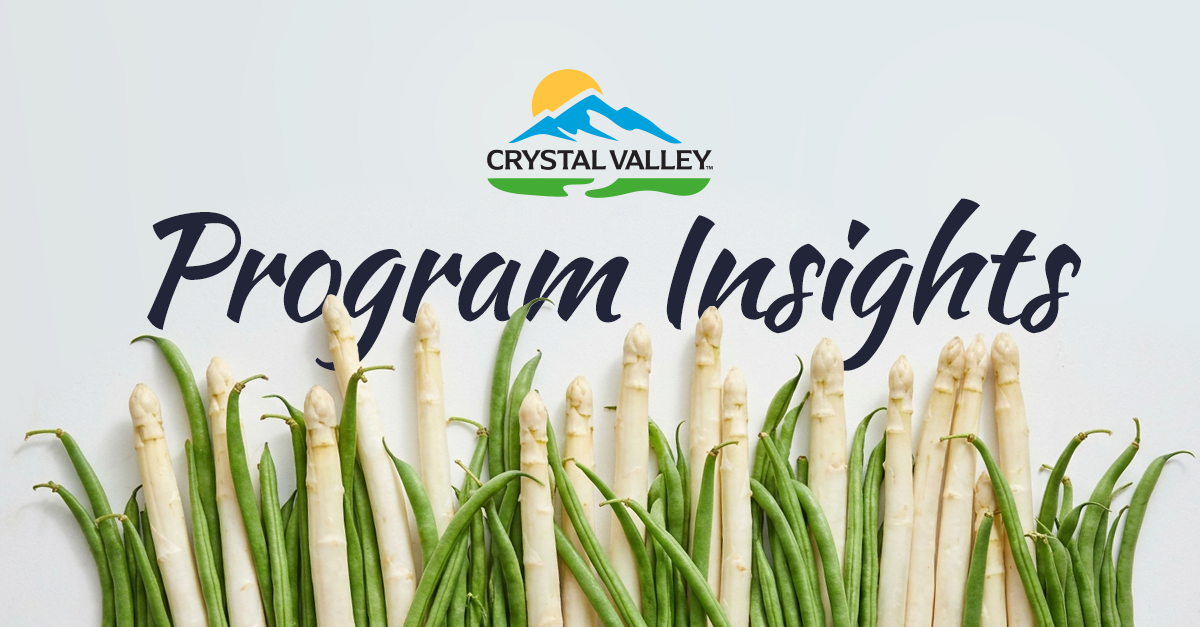
MIAMI, FL - Consumers want to differentiate their seasonal tablescapes, and what better way to do so than with fresh produce? Both French beans and white asparagus are a natural fit for holiday entertaining and elevated meals, and Crystal Valley Foods has the supplies to meet demand.

“French beans are already a holiday staple and work especially well for Thanksgiving, Christmas, and other seasonal gatherings. They offer convenience, versatility, and an upscale presentation while still being very familiar to consumers,” Katiana Valdes, Marketing Director, told me. “White asparagus brings something different to the holiday table. Its delicate flavor, tender texture, and distinctive appearance make it a great option for special occasions. We see an opportunity for retailers to use white asparagus to add variety to their asparagus assortment and give shoppers a premium vegetable option during a time of year when they are looking for something a little more special.”
Katiana relayed that Crystal Valley is in a good position with its French bean program this season. The supplier has continued to strengthen its grower network and has additional volume available to support both existing programs and new opportunities. Quality has reportedly been very good as well.

“One of our strengths is our experience with specialty produce and the relationships we have built with our growers over many years. With French beans, we have developed a strong program that allows us to offer consistent quality and volume while working closely with customers on their individual needs. We have also diversified our sourcing to help ensure consistent volume throughout the year,” Katiana explained.
White asparagus, on the other hand, is a much more specialized program, and Crystal Valley is excited about continuing to build awareness and demand for the item. Katiana pointed out that it is much less known in the United States than in Europe, where it is well loved. Supply is more limited by nature than green asparagus, and there can be small gaps throughout the year, but Crystal Valley works closely with its growers to secure quality product and maintain continuity for customers. It is a unique item that offers retailers an opportunity to bring something different and premium to the asparagus category.
“White asparagus is particularly exciting because, although it has been available in the U.S. for decades in both fresh and jarred forms, it is still relatively unique in the market. Crystal Valley has extensive experience in the asparagus category, and we see an opportunity to help educate retailers and consumers about white asparagus, how to prepare it, and how versatile it can be,” Katiana relayed. “We want to make the item more approachable while still maintaining the premium qualities that make it special. As part of that effort, we are now adding special tags to our white asparagus that give consumers a quick rundown on how to prepare it, helping take some of the mystery out of an item they may not have cooked with before.”

On a final note, Katiana told me how Crystal Valley is continuing to invest in the future of the business. The company is currently working on integrating AI into its systems and upgrading technology across different areas of the company. The focus is on building a stronger technology foundation that enhances both the customer and employee experience, improves operational efficiency and helps Crystal Valley stay ahead of rising costs and an increasingly complex produce industry.
“For us, technology is not about replacing the relationships and experience that have always driven our business,” Katiana stated. “It is about strengthening them. With these upgrades, we are improving visibility, efficiency, and access to information so our teams can make faster, better-informed decisions. Ultimately, those investments should translate into better communication and an even higher level of service for our customers.”
Katiana concluded, “At the same time, we continue to focus on what has always been important to us: strong grower partnerships, quality products, reliable service, and finding new opportunities within the specialty produce category. French beans and white asparagus are great examples of categories where we believe our experience and relationships can bring added value to our customers.”
Advantageous grower partnerships and investments in long-term growth will carry Crystal Valley far into the future. Stick with ANUK as we observe the journey.
|
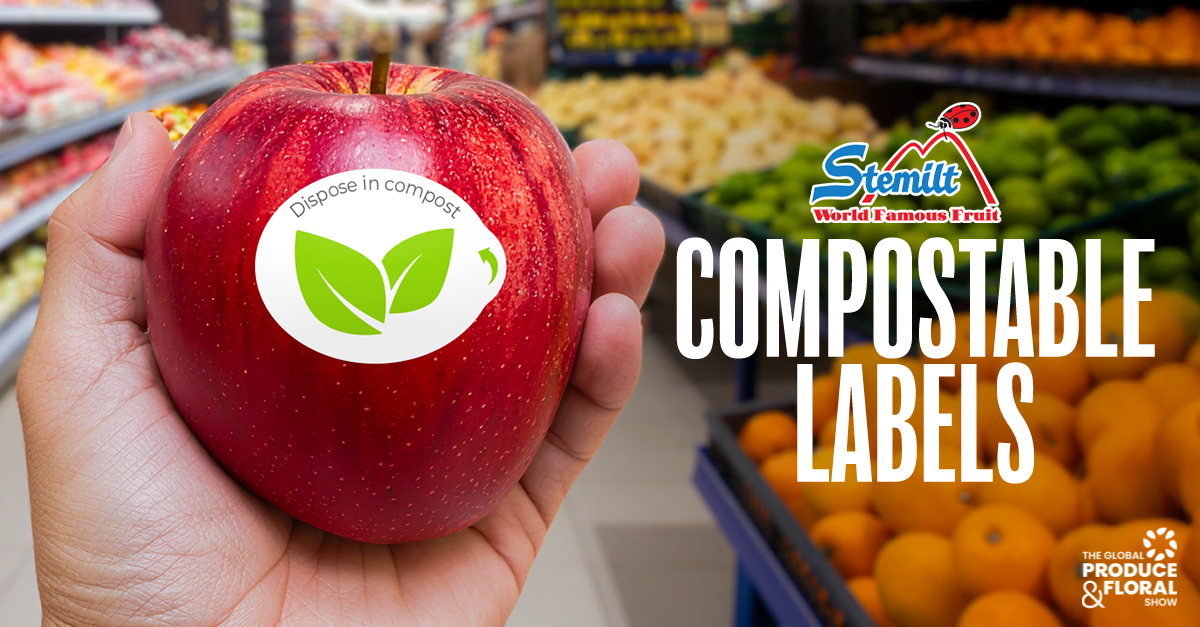
WENATCHEE, WA - Stemilt Growers has commenced a phased transition to a compostable fruit labeling program with Sinclair’s T55 labeling solution.
Stemilt Growers, a fifth-generation family-owned tree fruit grower, packer and shipper based in Wenatchee, Washington, has begun transitioning select apple varieties to Sinclair T55. Developed by global fruit-labeling provider Sinclair, T55 is a fruit label independently certified for both home and industrial composting, a press release stated.

Why compostable fruit labels matter
Unlike conventional fruit labels, certified compostable fruit labels are designed to break down under appropriate home or industrial composting conditions (T55 does both). Where conventional labels can remain as unwanted material when labeled fruit or peel enters food waste, certified compostable labels are designed to compost with the organic waste, helping reduce contamination and support cleaner composting streams.
About the Stemilt transition to compostable PLU labels
The transition will be phased across Stemilt's labeling program, beginning with 9 apple varieties packed at Stemilt's facilities in Wenatchee and at Douglas Fruit in Pasco. The initial phase is expected to transition approximately 57 % of PLU labels to Sinclair T55, with additional varieties and programs planned as the rollout progresses in 2027.

Brianna Shales, Marketing Director, Stemilt Growers, commented “It’s a practical improvement that aligns with our long-term commitment to environmental stewardship. With Sinclair T55 already proven with growers in other markets, we felt confident this was the right time to begin the transition here in North America."
See the compostable label transition at IFPA GPFS
Stemilt will feature the transition in its Fresh Ideas Showcase, with an artistic representation of composting labels while Sinclair will showcase composting and T55 at booth #3333. The displays will give IFPA attendees an opportunity to see how the label is designed to perform at end of life and talk to the teams.
Sinclair T55 is independently certified for home and industrial composting by TÜV Austria, DIN CERTCO and the Australasian Bioplastics Association.

The certifications show that the T55 label meets recognized international composting standards including EN 13432, NF T51-800 and AS 5810. It can be disposed of with suitable organic waste streams for home or industrial composting.
For Sinclair, Stemilt's transition demonstrates how certified compostable labeling can be introduced while maintaining the high-speed application performance packinghouses require. It also provides a practical example of how growers can address packaging waste while supporting organics recovery.
"Our founder, Tom Mathison, built this company on the belief that we're caretakers of the land and environment for a short time and have to leave it better than we found it," said Brianna Shales, Marketing Director, Stemilt Growers. "Labeling has been part of our story since we put our name on fruit in the early 1980s. We see this transition as an opportunity to maintain the benefits of fruit labeling while improving what happens to that label at the end of its life.”

“Sinclair T55 is engineered to deliver the high-speed application, adhesion and reliability packinghouses depend on, with the added benefit of certified end-of-life performance,” said Duncan Jones, Senior Marketing Manager at Sinclair. “We’ve seen strong adoption in New Zealand, Europe, South Africa and South America, and Stemilt’s transition is an important step for North America. It demonstrates that growers can move toward certified compostable labeling without compromising packinghouse performance.”
Stemilt: Booth #2847 | Sinclair: Booth #3333
IMMOKALEE, FL - At the International Fresh Produce Association’s Global Produce & Floral Show, Lipman Family Farms CEO Elyse Lipman was appointed chairwoman of the organization’s board of directors for 2027. She encouraged the entire produce industry to work and speak with one voice and fight for fresh food that’s accessible, reliable, and safe.
Growing trust has been a focus for Elyse since she first became Lipman Family Farms’ CEO in 2023. In 2026, the focus has been a major driver of growth in operations at Lipman Family Farms. The company recently acquired Inland Premium Packers in Riverside, California, to add essential packing capacity in one of the country’s largest produce markets. Weeks later, Lipman acquired Farm Fresh, a fresh-cut operation in Phoenix, which is helping to expand one of Lipman’s fastest-growing categories. The company also opened a new thermal-processing facility that’s brought a fire roasted and kettle cooking segment to the Lipman suite of services. Each move brings a wider variety of fresh, healthy and non-processed foods to retail and foodservice customers, with the aim of providing affordable, healthy food that’s easy for consumers to access.

As day two of the Global Show kicked off, Elyse accepted her new role as IFPA chair from 2026 Chair, Prof. Patrick Vizzone. She talked about making the industry’s long-term commitment to consumers visible and real.

“People want fresh food they can afford, and they want to know it comes from somewhere they trust,” said Elyse. “These aren’t complicated demands, but meeting them isn’t easy. Our job is to keep doing the hard work that makes it easy to choose, buy and enjoy healthy produce.”
As the new IFPA Board Chair, Elyse is excited to take her focus on growing trust to the entire industry.
In addition to its CEO’s new leadership role at IFPA, Lipman Family Farms is excited to showcase new branding that highlights produce people can trust—grown, crafted, and cared for from seed to shelf. Attendees are encouraged to stop by booth 1873 and see why everything Lipman Family Farms does is Good from the Ground Up.
Media interested in hearing more about Elyse Lipman’s appointment as IFPA Board Chair, or about Lipman Family Farms, can contact Morgan Stuckert. To explore Lipman’s products, capabilities, and decades of growth, visit lipmanfamilyfarms.com.