




















Email Vertical


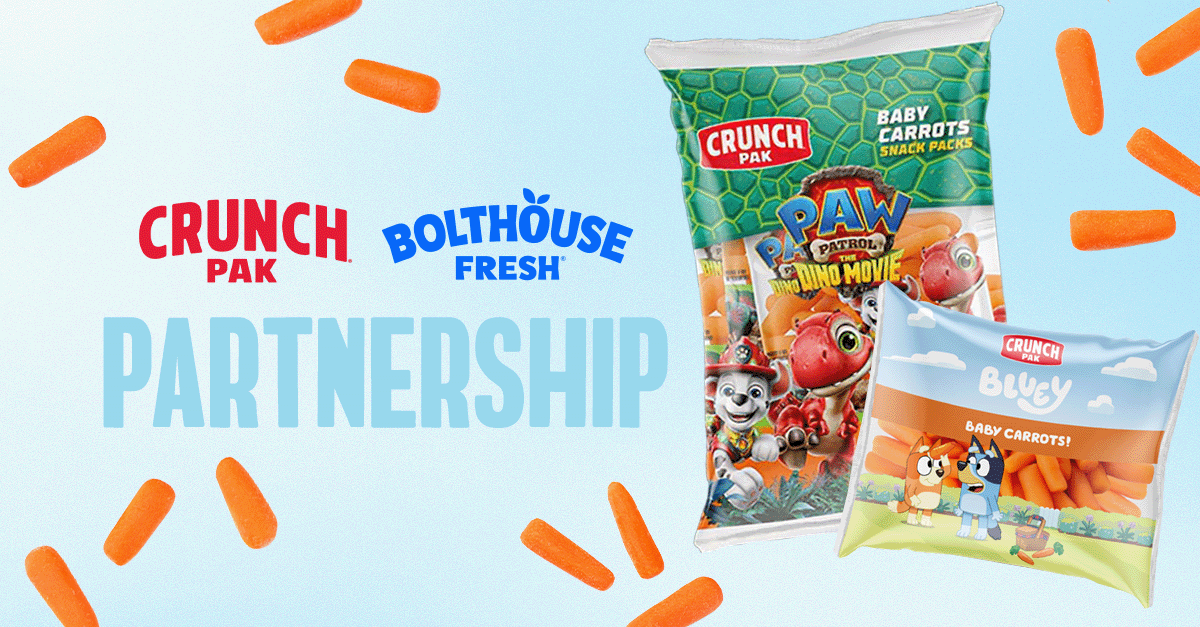
CASHMERE, WA - Crunch Pak and Bolthouse Fresh Foods are partnering to turn everyday carrot snacks into movie-themed options kids will instantly recognize with a new line of licensed baby carrot snack packs, launching in phases through August 2027.
The multi-year collaboration will align with major movie releases, bringing well-known franchises like Paw Patrol, Bluey, Frozen, and Shrek into the produce aisle in a way that captures kids’ attention, sparks parent purchase interest, and creates high-impact retail moments designed to drive incremental sales and repeat snacking.

“Partnering with Bolthouse Fresh Foods opens new doors for bringing licensed brands into the produce aisle,” said Jay Zimmerman, Licensing and Innovation Manager, Crunch Pak, in the recent release. “By pairing convenient, ready-to-eat carrots with iconic movie franchises, we’re creating a standout product that captures attention and drives excitement with families at shelf.”

For Crunch Pak, snacking that feels good is more than a value statement. It’s the idea behind everything the brand creates, from fresh-cut apples to new snack solutions made for busy families. With a focus on convenience, wholesomeness, and fun, Crunch Pak continues to make better-for-you snacking feel easier and more exciting.
The partnership taps into a proven opportunity to make fresh produce more exciting for families. Licensed characters can turn everyday vegetables into a snack kids recognize, request, and feel excited to eat, while giving retailers a timely, movie-driven merchandising platform with strong shelf appeal.

Together, Crunch Pak and Bolthouse Fresh Foods combine licensing expertise with category leadership in fresh carrots to deliver co-branded snack packs that help bridge the gap between what parents want to buy and what kids want to eat. By pairing fresh, convenient carrots with characters already loved by families, the program is designed to increase trial, encourage consumption, and bring new energy to fresh snacking occasions.

“Bolthouse Fresh Foods’ strategic partnership with Crunch Pak is a natural fit, bringing together fresh carrot leadership and family-friendly licensing expertise,” said Kim St George, Vice President of Sales and Marketing, Bolthouse Fresh Foods. “We want to make it easier for people to reach for carrots throughout the day - whether they’re packing lunchboxes, looking for a quick snack, or adding something fresh and simple to mealtime.”
Paw Patrol and Bluey are available now at participating retailers nationwide, with multiple rotations tied to major film releases through 2027. Upcoming launches will include baby carrot snack packs featuring DreamWorks Animation’s Shrek 5 for its summer 2027 theatrical release, followed by Disney’s Frozen 3 in November 2027.
As the collaboration rolls out, both companies see continued opportunity to grow at the intersection of fresh snacking, licensing, and consumer engagement, using entertainment to make produce feel more fun, relevant, and request-worthy for kids while helping retailers build excitement and momentum in the category.

SALINAS, CA - Choosing the right technology for a fresh produce operation is no small decision, especially when that system touches nearly every corner of the business. In its latest blog, Famous Software takes a closer look at the questions produce companies should be asking when evaluating an ERP, from industry-specific capabilities and connected data to integrations and long-term scalability.
Choosing an ERP is a significant business decision. The system you select will influence how people across your organization work, access information, serve customers, and make decisions for years to come.
ERP evaluations can quickly become overwhelming.
Feature lists grow. Demonstrations blur together. Departments have different priorities. Before long, the evaluation can become more about comparing individual capabilities than determining which system is actually the best fit for your business.
For fresh produce companies, the stakes are even higher. Your ERP needs to support not only traditional business functions, but also the speed, complexity, perishability, traceability, and customer requirements that define the industry.
So, how do you evaluate your options? Start with the questions that matter most.

Key Takeaways
1. Is the ERP Built for Your Industry?
Start with one of the most important questions: How well does the system fit the way your business actually operates?
Fresh produce companies manage realities that aren't always addressed by general-purpose ERP systems, including perishability, variable weights, traceability, grower relationships, repacking, rapidly moving inventory, food safety requirements, and customer-specific specifications.
Ask vendors to demonstrate how their system handles the workflows that matter to your operation. Note how much customization, additional software, or process change would be required.

2. Does It Support Your Most Critical Business Processes?
Before evaluating software, identify the processes your business cannot afford to compromise.
Depending on your operation, those might include inventory management, sales, purchasing, financial management, grower accounting and settlements, production, repacking, shipping, or other specialized workflows.
Growers, packers, and shippers may also want to take a deeper look at the operational details behind grower settlements, EDI, traceability, and connected financial data.
Then use real-world scenarios during demonstrations. Rather than simply asking whether a capability exists, ask vendors to show how their system would handle the way your team actually works.

3. Will Your Data Be Connected Across the Business?
An ERP should do more than support individual departments. Consider how information moves between them.
Can sales access current inventory information? Can operations see what needs to move? Can accounting work from the same underlying transactions? Can leadership get a reliable view across the organization?
Look closely at whether information is truly connected or whether employees will still need spreadsheets, duplicate data entry, manual reconciliation, or separate systems to get the complete picture.
See the full blog here.
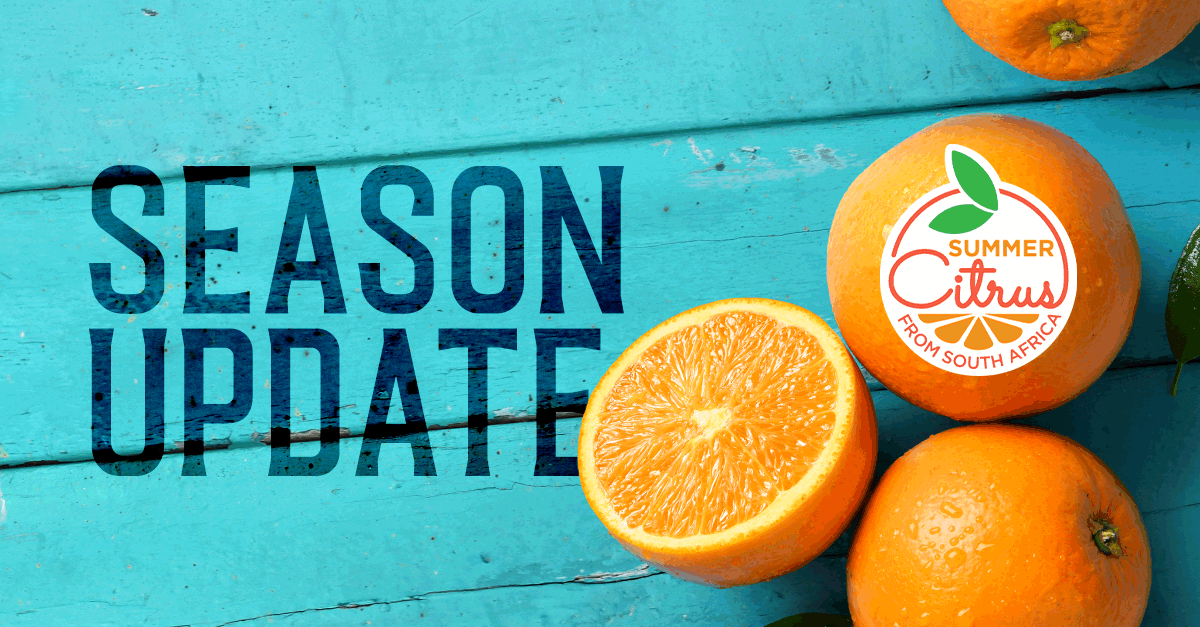
SOUTH AFRICA - As the South African citrus season begins to wind down, Summer Citrus from South Africa CEO Suhanra Conradie is sharing an update on remaining volumes, U.S. arrivals, and the shipping strategies keeping fresh citrus moving into the market. Conradie also highlights the group’s new container service and what it could mean for future growth in the U.S.

From a production perspective, our group will soon be finished for the season. Overall volumes have been slightly less than the 2025 season, shipping more Easy Peelers and fewer Oranges. We have finished loading Navels and Star Ruby, and we began packing Midknights a few weeks ago. We will most likely continue packing those for another week or two to conclude the season.
In terms of arrivals into the US, we still have the last of the Navels and Star Ruby arriving over the next two weeks. Strong arrivals of Midknights will continue until early October, with a few still arriving in mid-October.

We are busy loading our last conventional vessel, the Green Honduras, together with Seatrade. This vessel will arrive in Philadelphia during the first week of October. In addition, we are loading containers on the weekly service offered by MSC, which includes a seasonal port call in Philadelphia.
The standalone container service from MSC is new for us this season and includes calls in both Philadelphia and Savannah, GA. Savannah, in particular, presents an opportunity to build our business in that area. Weekly arrivals of fresh fruit have been the cornerstone of our sustained growth.
Our goal is to meet the demand of US consumers by offering fresh weekly arrivals of citrus throughout the summer. Therefore, we have a strong focus on executing our total supply chain with absolute excellence. We work closely with our shipping partners to make sure we deliver to our customers exactly what they want, when they need it.
The reality is that Philadelphia is where our customers and repacking facilities are situated, but there are no established direct shipping options from South Africa. To get our fruit where it needs to be, we have had to create our own solutions. During our season, we charter dedicated conventional vessels through Seatrade and have also made an agreement with MSC for weekly service into Philadelphia. Together, these arrangements allow us to receive fruit through facilities on both sides of the Delaware River.

Working with a perishable commodity, we expect that each season brings its own challenges, but also new opportunities. We have learned to adapt quickly, manage our challenges, and utilize our opportunities collectively.
Please stay up to date with us during the season and reach out to our grower-exporters or importers to secure your citrus throughout the summer months.
Thank you to all our loyal service providers for your continued support and contribution to our program!
Proudly growing, shipping, and selling the world’s finest Summer Citrus!

WASHINGTON, DC - The U.S. Department of Agriculture (USDA) has imposed sanctions on six produce businesses for failing to meet contractual obligations to the sellers of produce they purchased from and failing to pay reparation awards issued under the Perishable Agricultural Commodities Act (PACA). These sanctions include suspending the businesses’ PACA licenses and barring the principal operators from engaging in PACA-licensed business or other activities without USDA approval.
The following businesses and individuals are currently restricted from operating in the produce industry:
PACA provides an administrative forum to handle disputes involving produce transactions; this may result in USDA’s issuance of a reparation order that requires damages to be paid by those not meeting their contractual obligations in buying and selling fresh and frozen fruits and vegetables. USDA is required to suspend the license or impose sanctions on an unlicensed business that fails to pay PACA reparations awarded against it, as well as impose restrictions against those principals determined to be responsibly connected to the business when the order is issued. Those individuals, including sole proprietors, partners, members, managers, officers, directors, or major stockholders, may not be employed by or affiliated with any PACA licensee without USDA approval.
By issuing these penalties, USDA continues to enforce the prompt and full payment for produce while protecting the rights of sellers and buyers in the marketplace.
For more information, contact Penny Robinson-Landrigan, Dispute Resolution Branch, at (202) 720-2890, or [email protected].
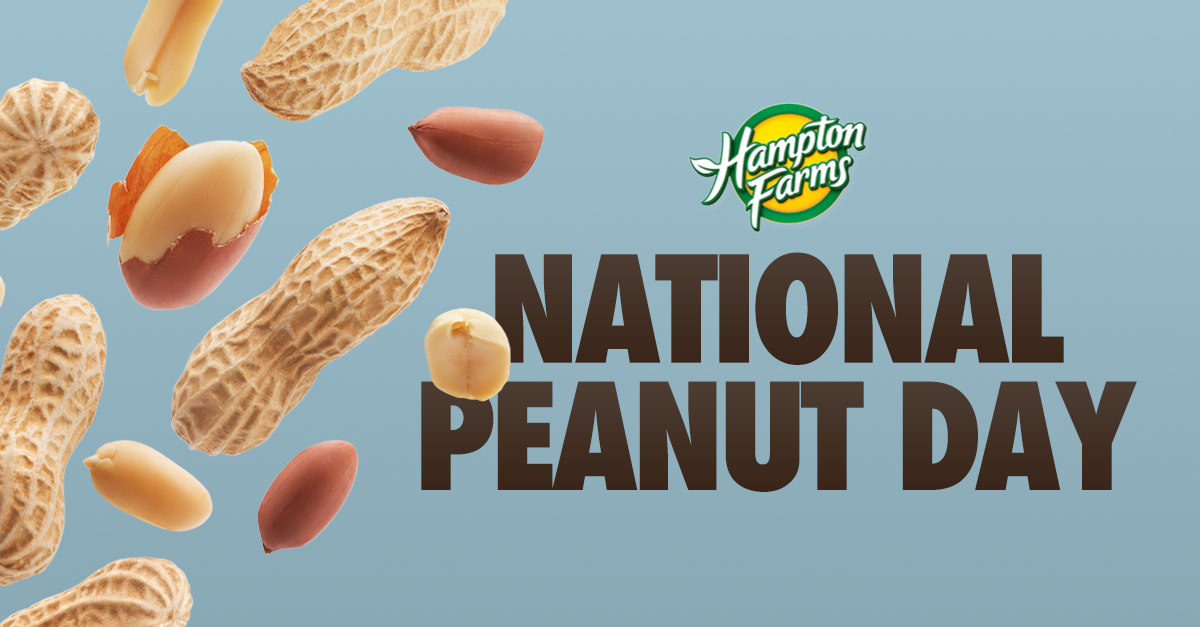
SEVERN, NC - Hampton Farms, America's #1 in-shell peanut company, is marking National Peanut Day by literally coming out of its shell. The company is launching Salted Virginia Peanuts and Cajun Flavored Virginia Peanuts—premium, shelled Virginia Extra Large peanuts in a resealable pouch — giving snackers a new way to enjoy the crunch and flavor Hampton Farms is known for.

"Consumers have told us they want the flavor and quality they expect from Hampton Farms in a format that's even easier to enjoy," said Eric Boonshaft, Senior Director of Marketing at Hampton Farms, in the recent release. "These new pouches deliver exactly that — bold flavor and the crunch peanut lovers know us for, now shelled and ready to go."
Available in two flavors, the Salted Peanuts offer a classic roasted-and-salted taste, while Cajun Flavored Peanuts bring a bold, savory kick for snackers craving more heat. Both showcase the large size and satisfying crunch Virginia peanuts are known for.

Hampton Farms Salted Virginia Peanuts and Cajun Virginia Peanuts will begin rolling out to select retailers nationwide.
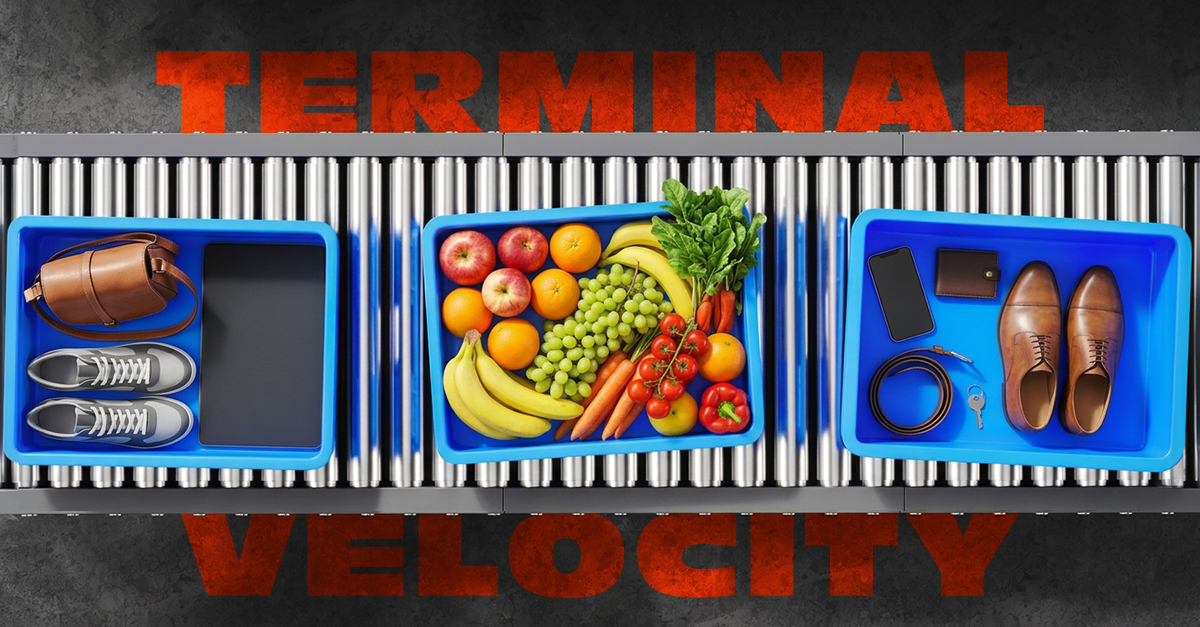
SALT LAKE CITY, UT - Just passed the security; a Protein Bar & Kitchen counter is moving quinoa and kale bowls faster than the burger stand next to it can flip patties. And the line waiting on that privilege runs deep, mostly twenty-somethings, mostly male—not exactly the demographic our industry's marketing decks spend the most time chasing. Nobody planned that. It happened anyway, and it's the kind of detail the produce industry ought to be writing down instead of walking past.
This isn't one airport having a moment. Newark opened Terminal A as an actual dining floor instead of a hallway with vending machines. Minneapolis-St. Paul and Detroit made the same wager in their own remodels. Four airports, four cities, one theory holding up so far: given an honest choice, the guy killing ninety minutes before a boarding call will take the bowl over the fryer.

Newark and Detroit are making the same bet in their own terminals, and they didn't stop at one concept. Terminal A's food hall runs Playa Bowls and Just Salad, alongside the coffee and sandwich counters, putting a build-your-own greens bowl in the same square footage that used to belong to a hot dog cart. Detroit's McNamara Terminal has been running its own version with 7greens. Same wager, different city: hand the traveler a real vegetable, in volume, and enough of them take it to matter.
Every one of those bowls is a produce order wearing a food-court disguise—avocado, kale, sweet potato, peppers, herbs, moving through a market that turns its entire customer base over roughly every ninety minutes. That's not a menu trend. That's a case count.

The industry has spent years treating the airport concourse as the place fresh goes to die, sweating under a heat lamp next to the sushi nobody trusts. Wrong read. It's turning into the toughest test kitchen in retail: tired, rushed, unsentimental customers, choosing fresh anyway, in the one environment built to punish a bad decision. If it works there, it isn't a fluke. It's demand.
The terminal used to be the last place fresh could win. These days it's the one closest to the gate.
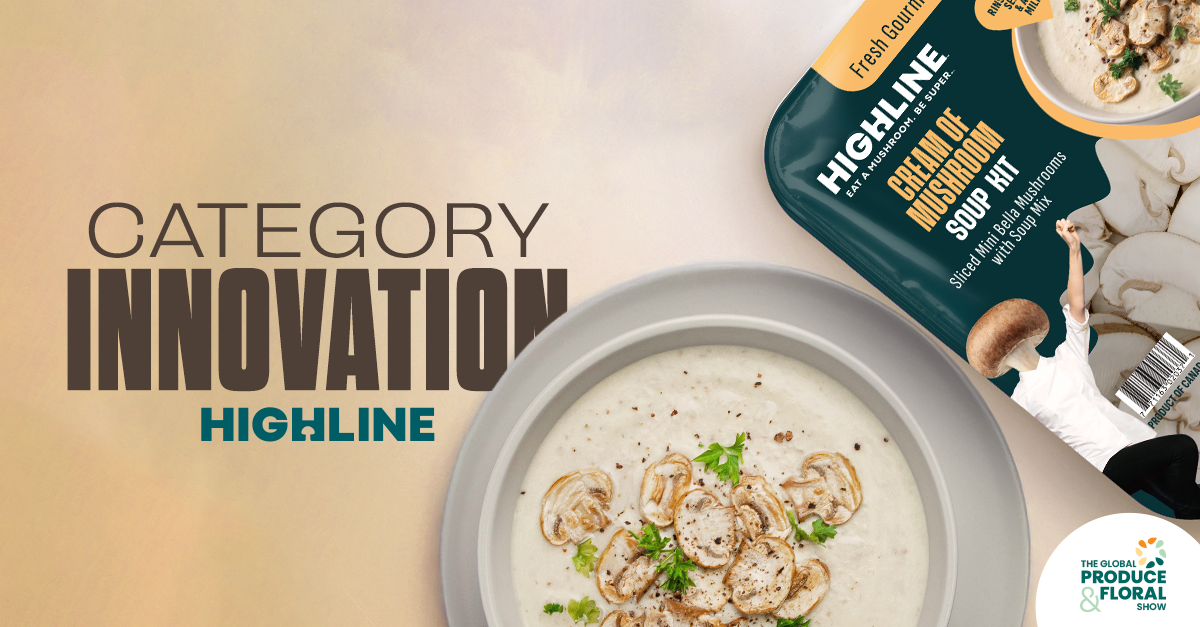
LEAMINGTON, ON - Highline Mushrooms is making it easier for shoppers to include mushrooms in their weekly menus, offering flavor and inspiration in the form of one innovative product. With the new product set to headline the company’s Global Produce & Floral Show showcase, Sabrina Pokomandy, Director of Business Development and Marketing, shared the strategy behind this creative launch.
Tell me about Highline Mushrooms’ Global Produce & Floral Show platform. What can attendees expect?

“This year, Highline Mushrooms is bringing a solution for both consumers and retailers, not simply another product.
At the center of our showcase will be the new Fresh Cream of Mushroom Soup Kit, the latest addition to our Fresh Gourmet Series. The concept takes a familiar meal occasion that has traditionally lived in the center store and brings it into the fresh produce department. Each kit includes fresh sliced Mini Bella mushrooms and a pre-portioned dry soup mix. The consumer simply sautés the mushrooms, adds the seasoning and milk, and has a fresh cream of mushroom soup that serves four in approximately 25 minutes.
For consumers, the kit provides a clear meal solution with less preparation and less guesswork. For retailers, it creates an additional mushroom usage occasion and a new way to drive engagement within the produce department.”

How does the new kit connect with today’s shopper and their needs?
“Mushrooms are one of the most versatile products in produce, but the shopper is still often left to decide what to do with them. The Fresh Cream of Mushroom Soup Kit changes that. Consumers already know the dish. We are simply giving them a fresh, convenient way to make it and giving the produce department an opportunity to own that occasion.
The same thinking extends across soup, sautéing, grilling, stuffed mushrooms, sides, and weeknight meals. Our opportunity is to make those occasions more visible at shelf and easier for shoppers to act on.
The Global Produce & Floral Show is an ideal environment to introduce these concepts because it allows retail partners to experience the products firsthand and immediately understand their role within the mushroom set. It provides an opportunity to move beyond a product presentation and have a broader conversation about how innovation, convenience, and meal solutions can help grow the category.”

How are consumer demands evolving in the mushroom category?
“The biggest shift is clear: shoppers increasingly want the answer, not just the ingredient.
According to the International Food Information Council’s 2026 Food & Health Survey, 61 percent of Americans say convenience impacts their food and beverage purchase decisions. YouGov also found that 60 percent of Americans prefer to spend less than 30 minutes cooking dinner. At the same time, Circana data shows Millennials drove 68 percent of new produce dollars at retail over the past year. That is an important combination for fresh produce. The shopper driving growth wants fresh food, but also wants speed, simplicity and a clear meal idea. Convenience no longer has to mean leaving the fresh department.
For mushrooms, our opportunity is to make the usage occasion obvious. Give shoppers the meal idea. Give them the convenience. Give them another reason to buy mushrooms.”

What strengths and capabilities keep Highline on the leading edge?
“Highline’s strength starts with the mushroom itself. We have been growing mushrooms differently since 1961, and quality, freshness, and consistency remain at the core of everything we do. But leadership in this category requires more than growing a great mushroom. It requires continually pushing the category forward.
We are investing in the future of growing through our Farm of the Future in Leamington, designed to bring greater precision, consistency, efficiency, and insight into how mushrooms are grown and harvested. We have also modernized how mushrooms show up at shelf, from our rebrand to clear rPET tills and top-seal packaging designed to let the product speak for itself. And we continue to build beyond the traditional mushroom set through value-added innovation such as the Fresh Gourmet Series, supported by shopper insights, retail media, digital content and category reporting.”
Continuing to invest in the future of the mushroom category, Highline remains focused on three central goals: growing the best quality mushrooms, building better solutions, and being a true category partner to its retailers.
|
