Wraparound


CALEXICO, CA - At the International Fresh Produce Association’s (IFPA) Global Produce & Floral Show, Altar Produce is excited to highlight its established Mexican green onion program. Since 1998, the company has developed the growing expertise, certified facilities, and operational capacity needed to support consistent programs throughout the year, according to Eva Viveros, Domestic Sales / Marketing.

“We want attendees to see that green onions are not simply an additional commodity for Altar, they are a core, full-time program supported by strong production and packing infrastructure. Our scale allows us to serve programs of different sizes while maintaining the food-safety standards, quality, freshness, and dependability our customers expect,” Eva began.
At the heart of the green onion program is Altar’s broader commitment to making fresh produce more accessible, appealing, and convenient. By supplying flavorful green onions and asparagus year-round, the supplier helps retailers inspire healthier eating habits and give consumers an easy way to add color and nutrition to everyday meals.
“What sets Altar’s green onion program apart is the strength of the entire operation behind the product. We combine extensive category experience with large-scale production, certified facilities, year-round availability, and a team that understands the specific needs of retail, foodservice, and wholesale customers,” Eva said.

Altar Produce’s program is designed around consistency, from planting and harvesting to sorting, cooling, packing, and shipping. The company closely monitors quality throughout the process and sorts the product by size and specification to meet each customer’s program requirements.
“Most importantly, we have built our green onion program for long-term partnerships. We understand that our customers need more than a competitive price; they need dependable supply, clear communication, program flexibility, and a supplier capable of responding when conditions change,” Eva explained.
As she pointed out, the produce industry continues to navigate unpredictable weather, labor pressures, transportation challenges, changing demand, and greater expectations surrounding food safety, sustainability, and supply-chain transparency.

Altar’s green onion program—like its asparagus program—is structured to respond to these challenges through strong growing operations, certified facilities, careful crop planning, responsible production practices, and close communication between the field, operations, sales, and logistics teams.
“Our scale and year-round production provide customers with a more dependable supply foundation, while our flexibility allows us to adjust to evolving specifications and market needs,” Eva relayed. “We also understand how important visibility and responsiveness have become. Customers need timely information, realistic expectations, and a supplier that works alongside them to find solutions. That partnership-driven approach is central to how Altar operates.”
Members of Altar Produce’s sales, marketing, operations, and leadership teams will be on the IFPA show floor to connect with current and prospective partners. Attendees can speak directly with the team about its year-round green onion program, as well as asparagus, Brussels sprouts, dates, and broccoli programs.

“This year, our booth will also feature a variety of interactive activities designed to bring our programs and operations to life. Whether someone has worked with Altar for years or knows nothing about our operation, these experiences will provide an engaging and easy-to-understand look at how our products move from the field to the shelf,” Eva said on a final note. “Our team will be available to discuss supply capabilities, seasonality, product specifications, packaging options, promotional opportunities, and customized programs for retail, foodservice, and wholesale customers.”
IFPA 2026 will be here soon, taking place in Orlando, Florida, October 14–16. Visit Altar Produce at booth #2771 if you plan to attend!
DOWNERS GROVE, IL - Fresh Thyme Market, a Midwest-based grocer known for delivering its customers an innovative assortment of fresh, organic, and better-for-you groceries, vitamins, and body care products, has released its annual Top 10 Trends report. Developed in partnership with SPINS, a leading provider of consumer packed goods data, insights and commerce solutions, the report delivers a forward look at emerging consumer behaviors, evolving wellness priorities and grocery product innovations to help forecast what shoppers can expect to see in stores in 2027.

From exciting twists on common grocery staples to finding innovative ways of adding fiber, protein, and other critical nutrients to everyday life, the trends point to a shopper who is asking for more. These are positive developments for the grocer that prides itself on delivering a superior, customer-focused experience that sets it apart.

"Grocery shoppers are redefining wellness on their own terms," said Cecily Martinez, Fresh Thyme Market Registered Dietitian. "People want fresh, organic, and better-for-you foods that deliver meaningful benefits without adding more complexity to their lives. We're seeing growing interest in innovative products such as nutrient-dense foods, functional ingredients, and globally inspired recipes that bring enjoyment and purpose to everyday eating. The 2027 trends reflect a consumer who is informed, intentional, and looking for a basket of items that are innovative, curated, convenient, and support their long-term well-being goals."
Fresh Thyme is constantly monitoring what's new and evolving across food, nutrition, and wellness, while partnering with trusted local brands to help bring innovative grocery items to its shelves. Their forecasted trends reflect an assortment of innovative grocery items making their way into shoppers' carts, helping Fresh Thyme stay laser-focused on what the customer demands and deserves.

Fresh Thyme Market's Top 10 Trends:
See the full release here.
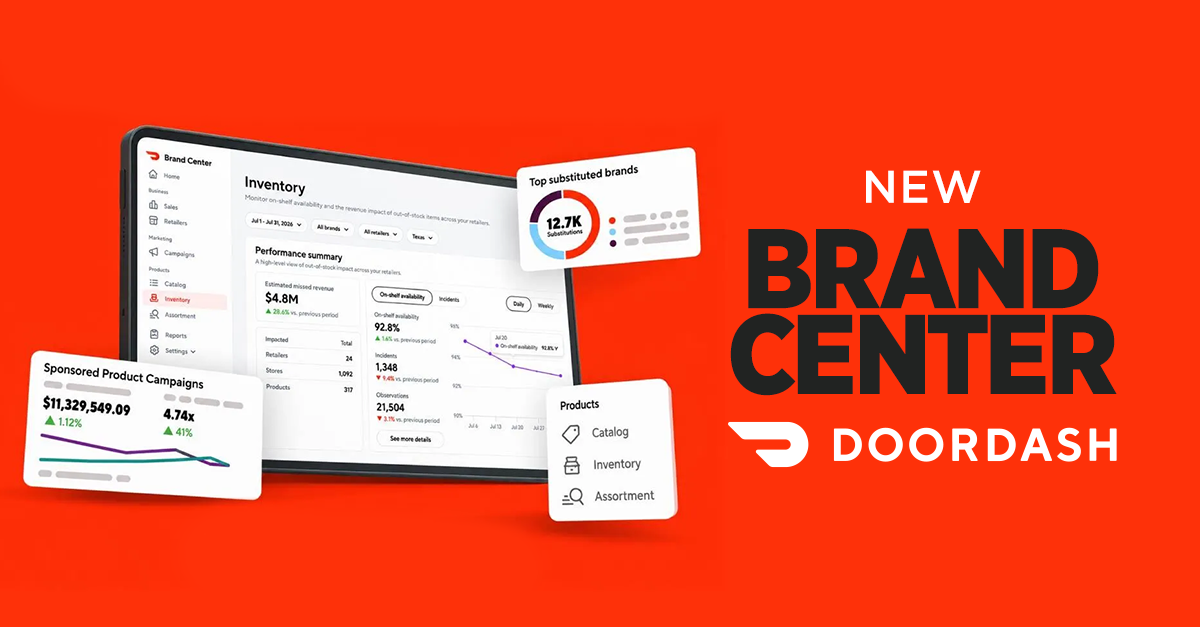
SAN FRANCISCO, CA - DoorDash introduced Brand Center, a platform built for the marketing, supply chain, category, e-commerce, and national account teams to get a clearer view of what’s driving growth across the digital and physical shelf. New capabilities built on top of advertising solutions give brands direct ways to improve how their products show up for consumers, from spotting in-store availability gaps to updating product content.

“Brand Center is part of DoorDash's broader investment in local commerce, providing brands with insights that help strengthen performance for their business and retail partners,” said Fuad Hannon, VP of New Verticals at DoorDash. “As the next evolution of Ads Manager, we built on the advertising portal brands already use and expanded the platform with a shared view of what is shaping growth beyond media investment. That means clearer visibility into everything from on-shelf product availability and shopper substitution behavior to catalog content and campaign performance.”
Inventory distortion from out-of-stocks and overstocks costs the global retail industry an estimated $1.7 trillion each year. With more than 200,000 retail and grocery stores* and nine million-plus Dashers**, DoorDash has a unique view into commerce as it happens — what shoppers are searching for and buying, and what Dashers see on shelves, including the moments when a purchase can't be completed because an item is out of stock.

Brand Center brings together purchase-based signals from consumer orders and audit-based signals from shelf scans into a single platform. Where inventory insights reveal a need for physical shelf action, brands have the opportunity to take action through Merchandising Tasks, which connect brands in eligible locations with targeted in-store support from Dashers: shelf audits, restocking, item counts, and promotional displays.
What's New in Brand Center:
Brand Center is part of DoorDash's broader retail push, including the same shelf-level visibility that helps brands spot availability gaps and complements DoorDash's growing marketplace of retail partners, including SKIMS, Gap, Kohl's, and others.
Brand Center is now available to all U.S. advertisers. Certain Brand Center features are currently available only to eligible advertisers. To learn more, visit Brand Center.
*Across DoorDash, Deliveroo, and Wolt Marketplaces. As of Q4 2025.
**Metrics include DoorDash and Wolt, as well as Deliveroo beginning on October 2, 2025, its acquisition date. "Dashers" generally refers to the independent contractors that use our marketplaces. In certain geographies, Dashers may be known locally as riders, courier partners, or similar. Dashers may also refer to employees or independent contractors of third-party service providers or employees of our local entities.
***Based on DoorDash internal data from January through June 2026.
****Based on DoorDash internal data from January through June 2026 across U.S. CPG brands onboarded to DoorDash’s advertising platform. A competing brand or product is one outside the advertiser’s onboarded portfolio.

SALINAS, CA - In fresh produce, every move made in the warehouse can have a financial impact. When operational and accounting systems fail to keep pace with one another, even small gaps in information can quickly affect inventory decisions, fulfillment, pricing, and profitability.
In its latest blog, Famous Software explores why warehouse activity and financial data should tell the same story—and how a connected ERP can help produce businesses keep teams aligned, reduce reconciliation work, and make decisions with greater confidence. Read on for the key insights.
Warehouse activity and financial data should tell the same story.
In a fresh produce operation, inventory is constantly moving. Product is received, transferred, repacked, allocated, shipped, and adjusted throughout the day. Those activities can affect inventory value, costs, revenue, and the financial information teams rely on to understand the business.

The challenge comes when warehouse and accounting systems operate separately.
If operational transactions move between systems through scheduled batch updates, manual entry, or other disconnected processes, different teams may be working from different versions of what's happening across the business. Inventory may have moved, costs may have changed, or an order may already be in process before that activity is reflected elsewhere.
That gap can affect everyday decisions around inventory, fulfillment, pricing, and profitability—and eventually create additional reconciliation work for finance.
Connecting operational and financial data can help close that gap.
Key Takeaways
Why Do Accounting and Warehouse Systems Fall Out of Sync?
Accounting and warehouse systems often fall out of sync because they operate as separate platforms and exchange information periodically rather than as transactions occur.
In many businesses, warehouse management and accounting began as separate systems designed to solve separate problems.

The warehouse system tracks what is happening operationally. The accounting system records the financial impact.
That creates a timing gap.
A repack or shipment may already be reflected operationally while the corresponding financial information is still waiting for the next synchronization. If an interface fails, a transaction changes after it has been transferred, or someone has to enter data manually, the gap can become even larger.
The result isn't necessarily one major error. More often, it's a collection of small discrepancies that someone eventually has to investigate and reconcile.
For a high-volume produce business, those exceptions can add up quickly.
See the full blog here.
FRESNO, CA - The California Table Grape Commission and the San Francisco 49ers have teamed up for the 2026 football season, bringing together two iconic California brands through a new partnership designed to build excitement for California grapes among consumers in Mexico.
As part of the partnership, Grapes from California is an Official Partner of the San Francisco 49ers in Mexico and the Official Grape Partner of the San Francisco 49ers. The partnership comes as the California table grape season moves into its high-volume fall months and the 49ers prepare to play in Mexico City on November 22 at Estadio Banorte.

Mexico is an important export market for California table grapes, and the partnership will create new opportunities to connect with consumers and support retail promotions during a key period of the California grape season. Activities planned throughout the fall include retail promotions, Spanish-language social and digital content, influencer content, and trade engagement.
“With the NFL returning to Mexico City and all the excitement that comes with it, we are thrilled to partner with California Grapes, who share our goal of engaging and growing our fanbase throughout Mexico,” said Ryan Connors, 49ers Senior Director, Global Partnership Sales & Strategy, in the recent release. “Our energetic ambitions match that of the California Table Grape Commission, and we look forward to bringing awareness and unique opportunities for California grapes to the Faithful.”

“Mexico is a vital market for California table grapes, and we are proud to partner with the San Francisco 49ers, an organization that shares our deep California roots and longstanding tradition of excellence,” said Ian LeMay, president of the California Table Grape Commission. “The 49ers have built an extraordinary bond with fans throughout Mexico, creating a natural platform to celebrate two iconic California legacies. Together, we look forward to bringing the quality, energy, and spirit of California to consumers across Mexico during the heart of our grape season.”
The partnership will activate leading up to the NFL Mexico game, with a range of content and activities designed to engage fans and support California grape promotion at retail in Mexico throughout the fall.
Participating retailers in Mexico will have opportunities to incorporate 49ers-themed creative into California grape promotions, bringing the partnership directly to shoppers in the produce department and creating additional reasons to look for California grapes.

The partnership will be supported through both the Grapes from California digital and social channels and the 49ers Spanish-language channels, including @49ersESP and 49ers.com/ESP. Additionally, the brands will collaborate with an online influencer who shares a connection to California and Mexico.
California grapes will be incorporated into 49ers fan activities in Mexico, including official watch parties, providing additional opportunities to engage consumers throughout the football season.
California produces 99 percent of the commercially grown table grapes in the United States. California grapes are available from May through January, with more than 80 varieties grown in green, red, and black. Mexico is one of the California table grape industry’s largest export markets.

MONTREAL, QC - Equifruit, North America’s market leader in Fairtrade-certified bananas, has been named one of Canada’s Top Growing Companies by The Globe and Mail for the fifth consecutive year. The Montreal-based importer ranks No. 230 in the Consumer category with a growth rate of 117%, proving that doing right by banana farmers also makes for a seriously good business plan.
Growth measured in Fairtrade farmer premiums

“We’re so proud to be on this list for a fifth year running,” says Jennie Coleman, President and Co-owner of Equifruit, in the recent release. “For us, growth is not just about numbers; it’s about impact for banana farmers. Every Equifruit Fairtrade banana sold means fairer wages and better conditions for banana growers. Twenty years in, that’s still what drives us to keep growing across North America.”
Long-term relationships based on better bananas, with stores near you
Equifruit has established itself as THE credible partner in a fast-growing Fairtrade produce market, and 2025 showed what that partnership delivers. Building on relationships with major retailers, Equifruit posted a year of strong organic growth, as shoppers at major chains it supplies, including Costco, Walmart and Pattison Food Group, increasingly reached for Equifruit’s Fairtrade organic bananas. Customers have been voting for better bananas with their grocery carts, week after week, and their stores listen.

A lesson in leadership: Don’t work with jerks
Asked for the best leadership lesson of running a business, Coleman doesn’t hesitate. “Don’t work with jerks,” she says. “So much time gets lost pleasing people who will not be pleased, no matter what you do. Make sure you build relationships with people who demonstrate shared values, not just tell you they do.”
Next stop: Orlando
Just in time for Fairtrade Month, the Equifruit team is now gearing up to enter Badass Mode at the IFPA Global Produce and Floral Show, October 15-16 in Orlando, Florida. Join the celebration at booth #4083 to talk Fairtrade, growth, and twenty years of shaking up the banana business.
And most importantly, to Find out why Equifruit is The Only Banana You Should Buy™.
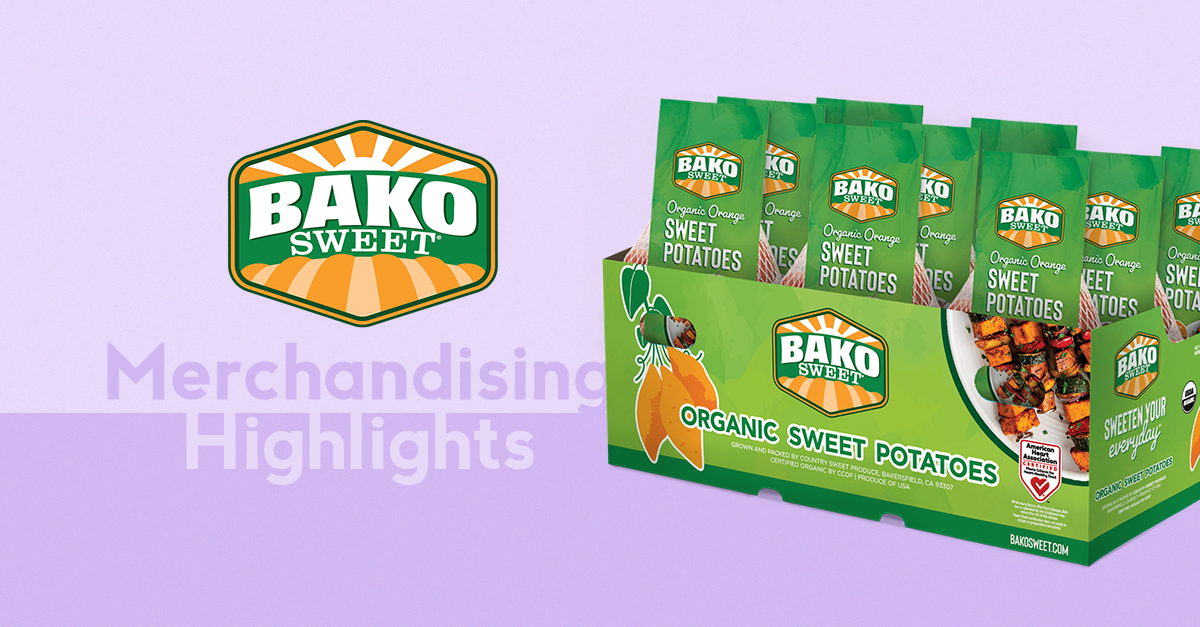
BAKERSFIELD, CA - Bako Sweet would like a piece of your onion set. Not all of it, and not forever, but the company is walking into retail partners with a specific and faintly impertinent ask: take a little space from onions and regular potatoes, hand it to sweet potato convenience packs, and watch what the department does. Their bet is that the staples never feel it.

"We see a big opportunity to revamp shelf space, giving sweet potatoes—especially convenience packs like bags, trays, and microwavable singles—a larger share of the table in alignment with the growth trajectory," Susan Noritake, Vice President of Sales and Marketing, Bako Sweet, shares. "We are inviting our retail partners to try this idea with some small reduction to onions and regular potatoes to make room. Our hypothesis is this minor shift wouldn't impact sales of those staples and would bring net new sales to the department."
The trade has spent this stretch calling what is happening in sweet potatoes consolidation, which is our industry's polite word for fewer phone numbers in the book. Susan does not accept the adversity framing that usually rides along with it.

"Like anything, companies have to evolve to stay relevant," she notes. "The world is changing at an ever-increasing rate of speed, and it's up to all companies, whether in produce or other industries, to make the right investments, have the right offerings, and be willing to make the hard decision to change when necessary."
Her actual thesis is a two-part test, and it arrives refreshingly free of the word solutions. To move a new item—and she argues a sweet potato eaten in April by a shopper under forty qualifies as new—you have to meet a need and get noticed.
"Consumers are interested in nutritious whole foods that taste great and are easy to shop and prepare. Check, check, check," Susan shares. "Now that we've met the need, it's time to get noticed. This is where our retail partners come in."

Getting noticed is the harder half, because outside of the holidays the sweet potato is on nobody's list. It gets one great week a year, and it falls in November. The other fifty-one run on eye contact: a display that catches a shopper mid-aisle, a bag that goes home on impulse, a good dinner that puts the item on the list for the next trip. Bako Sweet runs a year-round promotional calendar and partners with merchandisers to keep product stocked and rotated, which is less glamorous than a campaign and matters more.
The program leads with orange on purpose. "We lead with our orange varieties because they are the most versatile and can easily go from sweet to savory," Susan explains. "They are creamy and delicious with the best availability." Whites and purples keep expanding as boutique offerings — flavor-specific, harder to grow, and sitting at a premium price point accordingly.

As for who moves first on the shelf set, she is not predicting. An early believer turns out to be a trusted partner or an innovator; the wins get measured; the best practices travel. In the meantime: "Keeping shelves full is a big part of a winning strategy."
Which is another way of saying somebody has to go put the bags back.
Keep checking in with ANUK for more insights shaping the fresh produce industry.
