















Email horizontal



RIDGE SPRING, SC - Titan Farms, the largest peach grower on the East Coast, has achieved SQF Quality certification, further demonstrating the company’s commitment to maintaining rigorous quality control and assurance practices throughout its operations.
The certification follows the successful completion of an independent audit conducted on July 16, 2026. The audit evaluated Titan Farms’ quality management systems, including the processes used to monitor product quality, manage potential risks, and support consistency across its operations.

Many of the programs required under the SQF Quality Code were already established at Titan Farms before the certification process began. Achieving certification represents the final step in formally validating the standards, procedures, and quality management practices the company has maintained across its farming and packing operations.

“Achieving SQF Quality certification was an important next step in our continued commitment to excellence,” said Ross Williams, President of Titan Farms, in the recent release. “We want our customers to know that quality is not simply something we evaluate at the end of the process. It is integrated into how we operate every day, from our fields and packing facilities to the products we deliver.”
The SQF Quality Program is designed for organizations that have established food safety systems and want to implement additional risk-based processes to identify, control, and continuously improve product quality. Certification provides third-party validation that these quality management practices have been effectively implemented and maintained.

For Titan Farms, the achievement reinforces a long-standing approach to quality that extends from the field through packing and delivery. Quality is managed throughout the operation rather than evaluated only at the end of the process.

“Our team takes tremendous pride in the products we grow and pack,” said Taylor Berry, Director of Packing Operations & Food Safety at Titan Farms. “This achievement reflects their attention to detail, discipline, and shared responsibility for delivering the quality and consistency our customers expect from Titan Farms.”
Titan Farms will continue building upon its quality management systems through ongoing evaluation, employee training, and continuous operational improvement.

SALINAS, CA - Church Brothers Farms announced two leadership appointments in its Food Safety and Quality Assurance (FSQA) department. Abraham Cardenas has joined the company as Director of Quality Control, and Victor Soto has been promoted to Director of Field Food Safety. Both will report to Megan Chedwick, Vice President of Food Safety, Quality & Regulatory Compliance.

Cardenas will own Quality across field, harvest, cooler, facility, and supplier operations. This includes product integrity, defects, shelf life, and customer claims. Cardenas joins Church Brothers from Taylor Fresh Foods, where he spent five years as Corporate Food Safety & Quality Manager, overseeing more than 30 manufacturing facilities across the United States, Canada, and Mexico. He previously served as Food Safety & Quality Manager at Taylor Farms Retail in Gonzales, California, and began his career as a microbiologist at Primus Labs.

Cardenas holds a Bachelor of Science in Biology from Northern Arizona University and is currently completing a Master of Science in Food Safety at Michigan State University. He is PCQI and HACCP certified, has completed SPC training through ASQ, and is a former site SQF Practitioner.

Soto, promoted from Field Food Safety Manager, has spent nearly a decade with Church Brothers, joining the company in November 2016 and stepping into the Food Safety Manager role in 2023. In his new position, he will lead field food safety from grower through harvest across the company’s full U.S. footprint, totaling roughly 900 harvest employees across five counties in two states.
Soto oversees the company's LGMA, PrimusGFS, and customer audit programs. He also holds nine industry certifications, including HACCP, PSA Grower Training, four LGMA harvest certificates, pre-harvest risk assessment, and CFS sanitation, and has studied Agricultural Production and Food Safety.

“As Church Brothers continues to grow, so does our commitment to food safety and quality,” said Megan Chedwick, Vice President of Food Safety, Quality & Regulatory Compliance at Church Brothers Farms, in the recent release. “Abraham and Victor each bring a distinct set of expertise, and together they strengthen a leadership bench that’s built to move this program forward.”
MISSION, TX - Seven days. That is how much time remains to apply for the 2026-2027 Viva Fresh Clean Eating Challenge. For produce industry members who have thought about making a change but haven't yet taken that first step, two past participants have a message: say yes to yourself and see where it can take you.
Applications will remain open through September 18, giving industry members seven more days to apply for a program that has helped participants make meaningful, sustainable changes in nutrition, movement, and overall well-being.

The Clean Eating Challenge isn't about a quick fix or simply reaching a number on the scale. Participants receive education, accountability, access to health and wellness experts, and perhaps most importantly, the support of an industry community working toward healthier lives together.
For longtime participant and now CEC mentor Beth Atkinson from Elephant House PR, saying yes has meant losing 120 pounds. But five years into her journey, she says what she has gained matters far more.

“I can hike long distances, take yoga and group fitness classes, run, play sports and travel without constantly wondering whether my body will be able to keep up,” Atkinson said in the recent release. “When you've spent years modifying your life around your size or physical discomfort, those things feel incredibly freeing.”
The transformation has gone well beyond the physical. Atkinson says she has learned to recognize patterns around food and stress, found healthier ways to take care of herself and discovered forms of movement she genuinely enjoys.
“There isn't really a finish line. You just keep learning how to take better care of yourself, one choice at a time,” she said. “There is something incredibly powerful about having a tribe of people who understand the process and genuinely have your back.”

Former two-time participant Tommy Wilkins from Horton Fruit found his own reasons to make a change. After starting his journey in the 270s, he has lost 50 pounds, improved his health markers, reduced his blood pressure medication, and gained significantly more energy. Today, however, one of his biggest motivations is looking ahead.

“What you do today will yield results 10, 20 and 30 years from now,” Wilkins said. “With three young grandchildren, I want to be around, active as long as I can.”
Wilkins says he has now “graduated off the couch,” sleeps better, joins his active wife in more activities and has incorporated strength, core and flexibility exercises into his routine.
His advice to others considering the Challenge is simple.
“You do not have to be perfect. You do not have to change everything overnight. Just make a commitment to eat a little cleaner, move a little more and encourage the person beside you to do the same,” Wilkins said. “I have learned that small changes can make a big difference.”

For an industry that spends every day putting fresh fruits and vegetables on people's tables, Wilkins believes there is an even bigger reason to participate.
“Let us show people what our produce industry is really about: helping people eat better and live better.”
The 2026-2027 Viva Fresh Clean Eating Challenge is looking for produce industry members who are ready to make a commitment to themselves – not to perfection or a quick fix, but to taking the first step toward better health.
Seven days. What could saying yes change for you?
Applications are now due September 18, 2026.
Apply here: www.vivacleaneating.com.
|


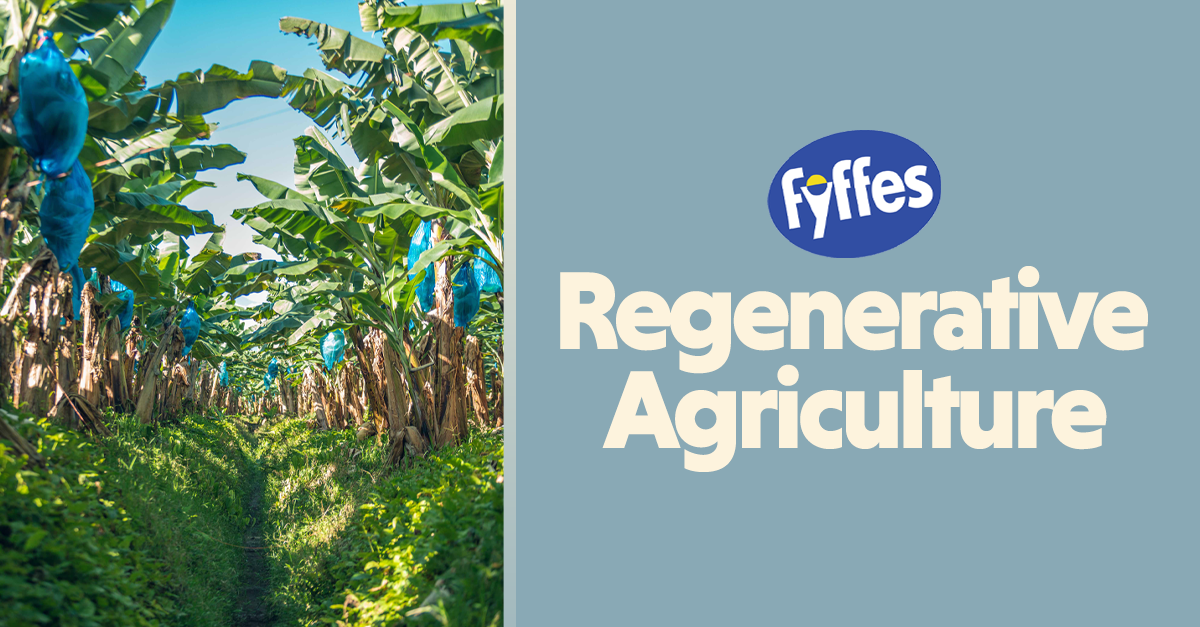
IRELAND - Fyffes, one of the world's leading tropical fruit companies, has launched its Regenerative Agriculture Framework, setting out an ambitious roadmap to integrate regenerative agriculture practices across 13,000 hectares of banana and pineapple farms by 2030 and extend proven approaches throughout its supply chain by 2035.
The new Framework reflects Fyffes' commitment to strengthening the long-term sustainability and resilience of tropical fruit production through a science-based, grower-centered approach focused on improving soil health, enhancing biodiversity, optimizing water management, reducing agrochemical dependency and addressing climate change impacts. Progress will be tracked through a robust Measurement, Reporting and Verification (MRV) system, providing transparent and measurable outcomes across five key impact areas.

Developed in collaboration with growers and agricultural experts, the Framework recognizes the unique challenges and opportunities associated with banana and pineapple production and provides a practical roadmap for implementing regenerative practices that protect both productivity and fruit quality while strengthening environmental performance.
As part of its long-term ambition, Fyffes aims to achieve 100% integration of the framework across its owned banana and pineapple farms by 2030 and to bring approximately 40% of fruit volume from key supplier operations under regenerative agriculture practices by 2035 through targeted capacity-building and knowledge sharing.
For customers, the initiative represents an important investment in the future resilience of tropical fruit supply chains. Banana and pineapple production increasingly faces challenges from climate change, extreme weather events, water stress, and evolving sustainability expectations. By improving soil functionality, biodiversity, water retention, and ecosystem health, regenerative practices can help farming systems become more resilient to environmental pressures while maintaining long-term productivity and quality.
The framework is designed to deliver tangible value for retailers, wholesalers and foodservice customers by supporting more resilient production systems, strengthening supply chain security, enhancing transparency through measurable sustainability data and helping customers meet growing consumer and regulatory expectations around responsible sourcing. The framework specifically identifies a more resilient supply chain as a key benefit for retail partners.

Sheila Morrison, Chief Supply Officer at Fyffes, said in the recent release: "The future success of the banana and pineapple industries depends on our ability to build resilience into the farming systems that support them. Through our Regenerative Agriculture Framework, we are investing in practices that strengthen soil health, improve water management and enhance biodiversity while maintaining productive, profitable farms."
"For our customers, this is about more than environmental stewardship. It is about supporting a more resilient and reliable supply chain that can better withstand climate-related challenges and continue delivering high-quality fruit for consumers in the years ahead. By scaling regenerative agriculture across our operations and supplier network, we are helping create long-term value for growers, customers and the wider food system."

Fyffes has already begun implementing regenerative agriculture initiatives across its owned operations, building on existing programs focused on soil health management, biodiversity enhancement and water stewardship. The new framework provides a structured pathway to scale these efforts, validate outcomes and share proven practices more widely across the company's supply chain.
Fyffes is also already working successfully with some customers on joint regenerative agriculture projects as well as via the Fairtrade certification, where the premium has been invested in regenerative agriculture initiatives in some countries.
The launch forms part of Fyffes' broader sustainability strategy and its commitment to strengthening the future of tropical fruit production through practical, measurable actions that benefit growers, customers, communities and the environment. By strengthening the resilience of farms today, Fyffes aims to help secure the long-term supply of high-quality bananas and pineapples for future generations.

NASHVILLE, TN - The Southeast Produce Council (SEPC) unveiled its sixth annual What’s New? 2026 consumer research during a packed educational session at Southern Innovations. The session featured an interactive format, with the study’s author, Anne-Marie Roerink of 210 Analytics, presenting the four trends, each followed by lively table discussions among attendees. Retailers, grower/shippers and other industry leaders explored the results together, sharing insights and perspectives for a full 360-degree view of what’s next for fresh produce.
Consumers are navigating tighter budgets, new health priorities and an increasingly digital decision-making environment. Additionally, Millennials are poised to overtake Boomers as the dominant share of produce spending within two years, bringing new ways of planning, shopping and preparation.

“Fresh produce remains important to all consumers, but a growing number are recalibrating their fruit and vegetable purchases,” said David Sherrod, President and CEO of the SEPC, in the recent release. “Consumers are looking to us to provide solutions that make fresh produce fit effortlessly into their daily routines, whether that is a budget, GLP-1, or kid-friendly diet.”
Key findings from the study include:
Financial pressure is changing how consumers shop produce
Fresh produce continues to generate significant dollar sales, but consumers are making increasingly deliberate decisions about where and how they spend, pressuring overall unit and volume growth.
GLP-1 medications create a new opportunity for produce
GLP-1 medications are becoming an increasingly influential force in grocery shopping and food consumption. The study finds that 18.1% of U.S. consumers currently use a GLP-1 medication, with usage particularly concentrated among higher-income consumers, ages 29 to 50 in urban and suburban areas.

The center of gravity is shifting to younger consumers
Boomers remain the largest generation by produce spending today, accounting for 33.5% of produce dollars (source: Circana).
AI is moving from experimentation into the food journey
Artificial intelligence is quickly becoming part of consumers’ food decision-making.

The future opportunity: relevance, value, and usefulness
Taken together, the study points to an industry operating in an environment where volatility is becoming the norm. Consumers continue to want fresh produce, but their expectations are evolving. “Consumers are asking us to solve different problems,” said Sherrod, “help me stretch my budget, help me eat better, what is GLP-1 friendly, help me figure out what to make tonight and increasingly, help me navigate an enormous amount of information. Those are opportunities for the fresh produce industry.”
The online study among 1,500 consumers plus an additional sample of 150 verified GLP-1 medication users was conducted and presented by 210 Analytics. The study was fielded in August, 2026. A complete copy of the findings can be requested by contacting Anna Burch at SEPC.