Email horizontal



MONTREAL, QC - Equifruit, North America’s market leader in Fairtrade-certified bananas, has been named one of Canada’s Top Growing Companies by The Globe and Mail for the fifth consecutive year. The Montreal-based importer ranks No. 230 in the Consumer category with a growth rate of 117%, proving that doing right by banana farmers also makes for a seriously good business plan.
Growth measured in Fairtrade farmer premiums

“We’re so proud to be on this list for a fifth year running,” says Jennie Coleman, President and Co-owner of Equifruit, in the recent release. “For us, growth is not just about numbers; it’s about impact for banana farmers. Every Equifruit Fairtrade banana sold means fairer wages and better conditions for banana growers. Twenty years in, that’s still what drives us to keep growing across North America.”
Long-term relationships based on better bananas, with stores near you
Equifruit has established itself as THE credible partner in a fast-growing Fairtrade produce market, and 2025 showed what that partnership delivers. Building on relationships with major retailers, Equifruit posted a year of strong organic growth, as shoppers at major chains it supplies, including Costco, Walmart and Pattison Food Group, increasingly reached for Equifruit’s Fairtrade organic bananas. Customers have been voting for better bananas with their grocery carts, week after week, and their stores listen.

A lesson in leadership: Don’t work with jerks
Asked for the best leadership lesson of running a business, Coleman doesn’t hesitate. “Don’t work with jerks,” she says. “So much time gets lost pleasing people who will not be pleased, no matter what you do. Make sure you build relationships with people who demonstrate shared values, not just tell you they do.”
Next stop: Orlando
Just in time for Fairtrade Month, the Equifruit team is now gearing up to enter Badass Mode at the IFPA Global Produce and Floral Show, October 15-16 in Orlando, Florida. Join the celebration at booth #4083 to talk Fairtrade, growth, and twenty years of shaking up the banana business.
And most importantly, to Find out why Equifruit is The Only Banana You Should Buy™.
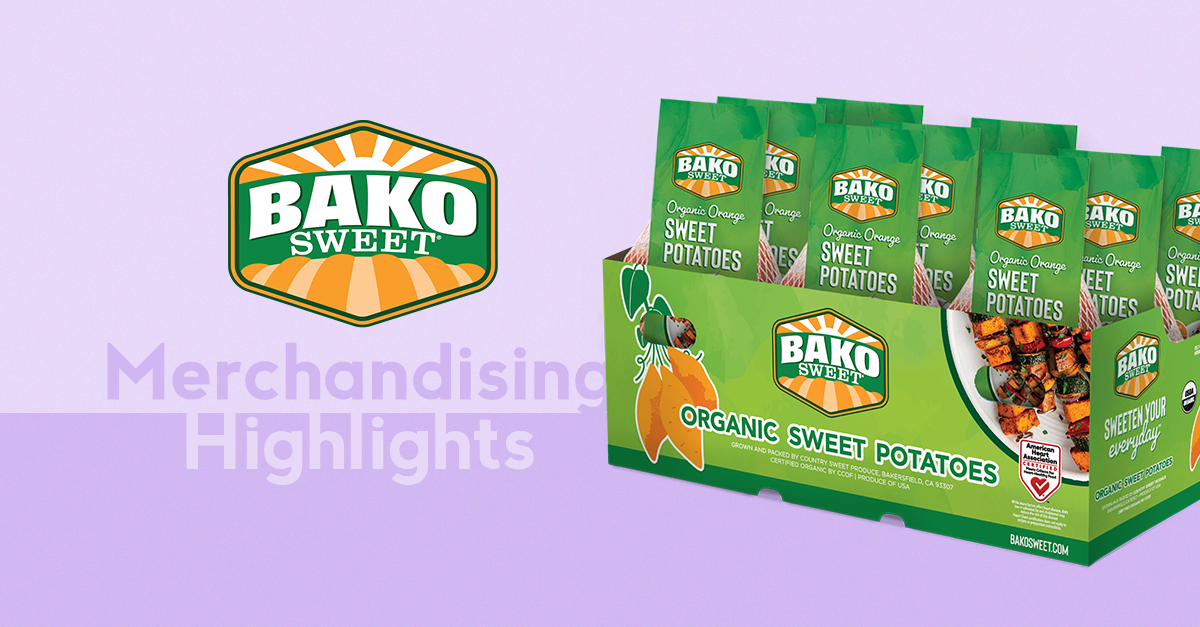
BAKERSFIELD, CA - Bako Sweet would like a piece of your onion set. Not all of it, and not forever, but the company is walking into retail partners with a specific and faintly impertinent ask: take a little space from onions and regular potatoes, hand it to sweet potato convenience packs, and watch what the department does. Their bet is that the staples never feel it.

"We see a big opportunity to revamp shelf space, giving sweet potatoes—especially convenience packs like bags, trays, and microwavable singles—a larger share of the table in alignment with the growth trajectory," Susan Noritake, Vice President of Sales and Marketing, Bako Sweet, shares. "We are inviting our retail partners to try this idea with some small reduction to onions and regular potatoes to make room. Our hypothesis is this minor shift wouldn't impact sales of those staples and would bring net new sales to the department."
The trade has spent this stretch calling what is happening in sweet potatoes consolidation, which is our industry's polite word for fewer phone numbers in the book. Susan does not accept the adversity framing that usually rides along with it.

"Like anything, companies have to evolve to stay relevant," she notes. "The world is changing at an ever-increasing rate of speed, and it's up to all companies, whether in produce or other industries, to make the right investments, have the right offerings, and be willing to make the hard decision to change when necessary."
Her actual thesis is a two-part test, and it arrives refreshingly free of the word solutions. To move a new item—and she argues a sweet potato eaten in April by a shopper under forty qualifies as new—you have to meet a need and get noticed.
"Consumers are interested in nutritious whole foods that taste great and are easy to shop and prepare. Check, check, check," Susan shares. "Now that we've met the need, it's time to get noticed. This is where our retail partners come in."

Getting noticed is the harder half, because outside of the holidays the sweet potato is on nobody's list. It gets one great week a year, and it falls in November. The other fifty-one run on eye contact: a display that catches a shopper mid-aisle, a bag that goes home on impulse, a good dinner that puts the item on the list for the next trip. Bako Sweet runs a year-round promotional calendar and partners with merchandisers to keep product stocked and rotated, which is less glamorous than a campaign and matters more.
The program leads with orange on purpose. "We lead with our orange varieties because they are the most versatile and can easily go from sweet to savory," Susan explains. "They are creamy and delicious with the best availability." Whites and purples keep expanding as boutique offerings — flavor-specific, harder to grow, and sitting at a premium price point accordingly.

As for who moves first on the shelf set, she is not predicting. An early believer turns out to be a trusted partner or an innovator; the wins get measured; the best practices travel. In the meantime: "Keeping shelves full is a big part of a winning strategy."
Which is another way of saying somebody has to go put the bags back.
Keep checking in with ANUK for more insights shaping the fresh produce industry.
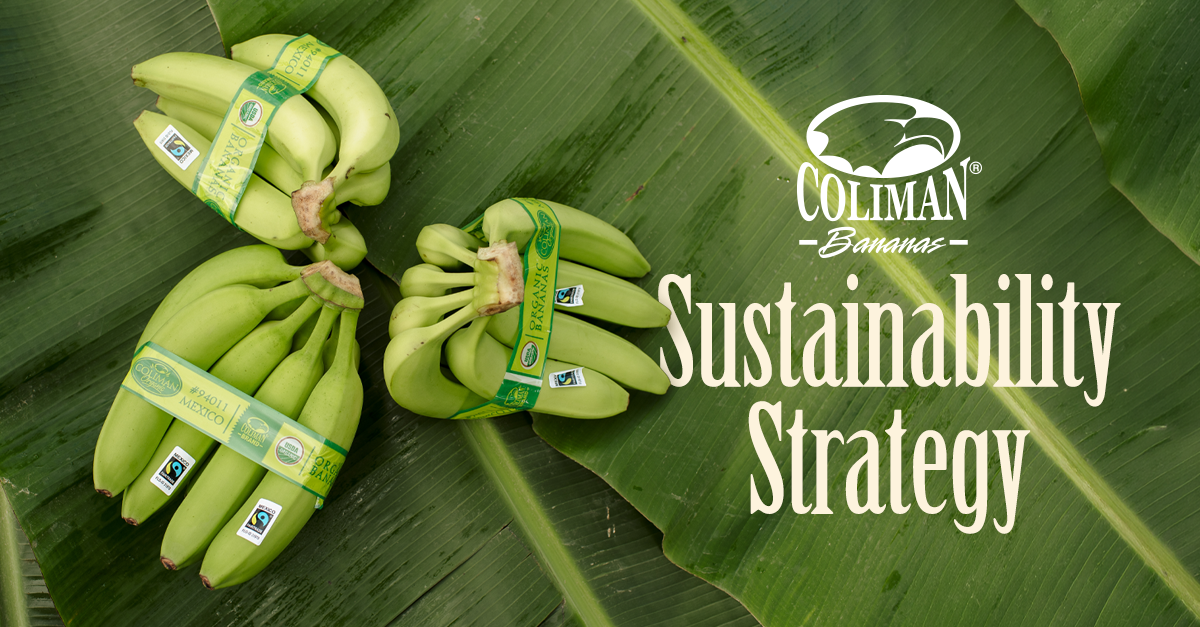
MEXICO - Organic certification may have helped raise the bar for responsible farming, but Coliman Bananas believes the industry can reach even higher. The supplier recently earned Regenerative Organic Certified (ROC) status, marking a significant step in its long-term sustainability strategy and its efforts to support evolving retailer and consumer expectations.
For Coliman Bananas, the certification represents more than another seal on its products. It recognizes the company’s continued focus on soil health, biodiversity, responsible agricultural practices, employee well-being, and the communities connected to its farms.
“ROC represents much more than an additional certification,” shared Jorge Ángel Aguilar Gallegos, CEO of Coliman Bananas. “It is the result of a long-term commitment to continuously improving the way we produce bananas.”

The achievement also brings regenerative agriculture into a commercial-scale banana operation, demonstrating how responsible farming practices can be implemented while maintaining the quality, consistency, and reliable supply retailers require.
Coliman Bananas views regenerative agriculture as the next step in the industry’s sustainability journey. While organic production established stronger agricultural standards, regenerative practices focus on restoring and improving the natural systems that make farming possible.
“Consumers and retailers are increasingly looking beyond the traditional definition of organic,” Jorge explained. “They want greater transparency about where food comes from, how it is produced, and what impact its production has on people and the environment.”

To meet those expectations, Coliman Bananas is investing in certifications, practices, and processes that allow the company to measure and continuously improve its environmental and social performance. At the same time, it remains focused on the everyday needs of its customers, including food safety, traceability, dependable supply, consistent quality, and strong execution from the farm to the retail shelf.
That balance plays an important role in the supplier’s retail partnerships. Coliman Bananas approaches its customers as long-term partners and works closely with them on packaging, supply planning, product programs, and quality requirements.
ROC certification also gives retailers a credible story to share with shoppers who want to understand the people and practices behind their purchases.
“Our objective is to provide not only a banana, but a product with a clear and credible story behind it—from the farm and the people who grow it to the environmental practices that support its production,” Jorge said.

Coliman Bananas combines deep agricultural roots in Mexico with experience serving customers throughout North America, Asia, and other international markets. That global reach has given the company insight into a wide range of retail requirements and consumer preferences.
Its work in organic agriculture, Fairtrade, social responsibility, and now regenerative agriculture reflects the belief that commercial success and responsible production should grow together.
Looking forward, Coliman Bananas plans to expand its regenerative practices, strengthen traceability and transparency, and develop programs that address the changing needs of retailers and consumers. As part of its strategy to strengthen its organic and ROC offerings, the company is also developing these initiatives in Ecuador. This work will complement production in Mexico, expand customers’ sourcing options, and support a consistent fruit supply throughout the year.
“Ultimately, our goal is simple: to grow a better banana business for the long term—one that creates value for our customers, our consumers, our people and the communities and ecosystems where we operate,” Jorge concluded.
Stay tuned to ANUK as this story, and others, continue to grow.
RIVERSIDE, CA - Blue Banner launched its direct sales arm, Goody, in 2025 to mark the company's 75th anniversary, choosing the IFPA Global Produce and Floral Show for the debut. The 2025 show drew the largest buyer attendance in its history, with more than 3,500 buyers from over 50 countries.

"We didn't start from scratch with Goody — we started from experience, leaning on our long history in the industry and time-tested relationships," said Vince Mazzetti, Vice President of Blue Banner and Goody.
The third generation of the Mazzetti family to lead operations, Mazzetti works to uphold the standard of service the company's brands are known for while building systems that let the tenured business serve more clients.
Over the past year, Goody has formed strategic partnerships with distributors in Japan and Korea, taking the new sales arm global within twelve months of launch.

"I love getting messages from people who find our fruit at local retailers, from Pavilions to Costco, and in trusted markets in Japan and Korea," Mazzetti said. "Our team is inspired every day by the chance to bring quality citrus to retailers near and far. We love what we do, and we're grateful to work in an industry that's deeply rooted in community."
Goody will celebrate its first anniversary at the 2026 IFPA Global Produce and Floral Show in Orlando, Florida, at booth #2987.
|
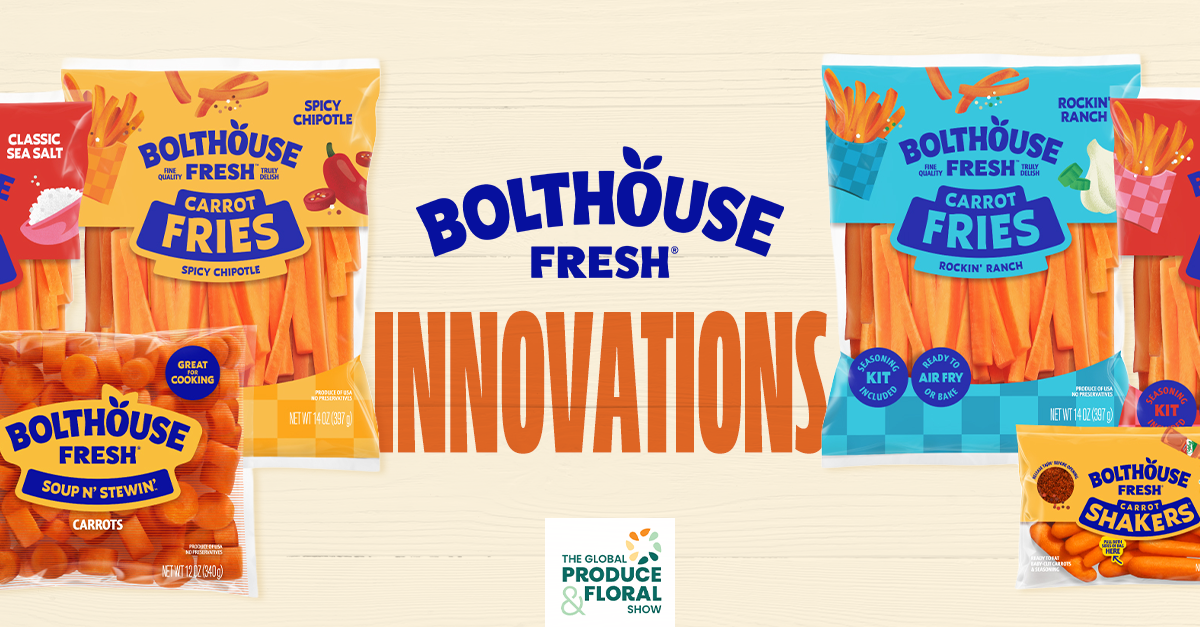
BAKERSFIELD, CA - Bolthouse Fresh Foods™ is proving that a familiar category is still a space ripe for innovation. With a variety of unique products that are redefining the carrot sector, the supplier is carving out new opportunities from snacking to entrees and everything in between. Kim St George, Vice President of Sales and Marketing, gave us a closer look at this lineup ahead of the 2026 Global Produce & Floral Show.

“Our core message at this year’s IFPA Global Produce & Floral Show is that there’s still tremendous opportunity to innovate within the carrot category,” Kim shares as we discuss the company’s fast-growing portfolio. “We’ll be showcasing the breadth of our portfolio, from our core carrot products to value-added innovations designed to create new eating occasions and bring more versatility to the category.”
Attendees will have the opportunity to sample two of those innovations at booth #1977: Carrot Shakers® featuring Tajín® Clásico Reduced Sodium Seasoning, as well as all three varieties of Bolthouse Carrot Fries: Sea Salt, Rockin’ Ranch, and Spicy Chipotle.

Also headlining the supplier’s IFPA showcase is the return of its popular Soup N’ Stewin’® carrots. Now available as a year-round item, this innovative offering gives retailers and consumers an easy, ready-to-use option for soups, stews, and everyday meals.
“What sets us apart is our singular focus on carrots. From our core business to our newest innovations, carrots are at the center of what we do. That deep category expertise allows us to take a consumer-led approach to innovation, looking at how people are eating today and finding new ways carrots can meet those needs across snacking, sides, and meal preparation,” Kim explains. “Products like Carrot Shakers, Carrot Fries, Organic Side Dish Sizzlers, and Soup N’ Stewin’ demonstrate how we’re creating new formats and eating occasions around a familiar vegetable while continuing to support and grow the core carrot business.”
This category leadership also extends to how Bolthouse Fresh Foods partners with retailers.
“We leverage syndicated data and consumer insights to help identify opportunities within the carrot category and support our customers in making informed decisions that drive growth,” Kim adds.

Today’s consumers are seeking foods that balance health, value, convenience, and great taste, while retailers are looking for ways to drive engagement and incremental growth within fresh produce. The Bolthouse Fresh portfolio is strategically designed with those dynamics in mind.
“We’re creating approachable solutions that make carrots easier to incorporate across more occasions, from grab-and-go snacking with Carrot Shakers and our new Carrot Snack Cups, to cooking and meal preparation with Soup N’ Stewin’, Carrot Fries, and Organic Side Dish Sizzlers,” Kim says. “At the same time, our broad core carrot portfolio gives retailers the flexibility to meet a range of consumer needs, formats, and price points.”
Attendees of the 2026 Global Produce & Floral Show are invited to meet with Bolthouse’s sales, marketing, and leadership teams at booth #1977, where they can explore the brand’s full carrot portfolio, learn more about what’s ahead, and sample some of its latest innovations.
Until then, keep an eye on ANUK for the latest updates!

UNITED STATES - Everyone is watching the price at national pumps climb. For growers, packers, and shippers, that number lands somewhere deeper, because diesel hits the supply side where it hurts: the ability to do business well, and at the standard they live and die by.
In California, where so much of this country's fresh produce originates, on-highway diesel averaged $8.25 a gallon in the U.S. Energy Information Administration's Sept. 21 survey, released Tuesday. The national average reached $6.53, up 24 cents in a single week and $2.78 above where it sat a year ago. The West Coast as a whole came in at $7.46, the Midwest at $6.68, and the Gulf Coast at $6.18, putting more than $2 a gallon between California and the cheapest region in the country.
Daily tracking reveals even more pain points. AAA put California's statewide diesel average at $8.44 on Sept. 22, up from $5.16 a year ago, with metro averages running from $8.16 in El Centro to $8.94 in San Rafael, a spread of 78 cents inside California alone. Salinas sat at $8.72. Nationally, AAA's $6.53 average is 77 percent above the $3.69 drivers were paying a year ago, and the association lists it as the highest national diesel average on record.

To say that transportation costs are critical to domestic production would be an understatement. Margins are eroding across the supply chain.
With produce suppliers bearing the cost of these surcharges, a possible solution is for retailers to help cover them. Ideally, added costs such as fuel surcharges are built into contracts from the outset. When they are not, the relationship carries the weight, and not every buyer is receptive.
The EIA now expects distillate supply to stay tight into 2027.
And truckload linehaul rates climbed 11.3 percent year over year in August, according to Cass Information Systems.
A surcharge for suppliers is not just absorbed; it has a profound impact. And not just on costs today, but on the viability and livelihood of our produce companies tomorrow and in the future.
Figures and Sources